dsh-notebook
A sidebar notebook for DSH — + a new entry → title + body → paste images (videos rejected) → “Done” files it under its title → click the title to copy the body → reference notes with @ → “Edit” reuses the very same container.




dsh-plugin · deepseek-harness · notebook · notes · sidebar
English · 中文
Suggested GitHub topics:
dsh-plugindeepseek-harnessnotebooknotessidebar
What it is
dsh-notebook is a Web plugin for DSH (DeepSeek Harness): a small notebook that lives in the sidebar.
No rich-text editor, no cloud sync, no version history — it does one thing: jot down a note that has a title, a body and a few images,
and use it from the composer: a single click on the title copies the body, and typing @ can reference a note.
Notes are global (not isolated per conversation) and images are stored as real files on the host disk, addressed by path.
Features
| Feature | Detail |
|---|---|
+ creates an entry |
The + sits in the top-right corner of the sidebar page; clicking it opens the editor container inside the panel (no new window, no second sidebar tab) |
| Text container | Single-line title <input> + body <textarea> + image thumbnail strip, sharing one scrollable container |
| Images yes, videos no | All three entry points share one validation path: paste (onPaste), drag & drop (onDrop), and the “Insert image” button (<input type="file" accept="image/*" multiple>). video/* MIME types and mp4/mov/webm/mkv/avi/m4v/ogv extensions are rejected inline with “video files are not supported”; anything that is not an image gets “only image files are supported” |
| Title + body | The title is what the list displays; the body carries the content |
| “Done” files it under its title | The container closes and the list shows one row per note, titled, newest first, with “time · N images” as secondary metadata |
| Click the title to copy | The clipboard receives the body only (never the title); image markers become a [image: <name>] line. A 2-second toast confirms “body copied (N chars)”. Clicking a title only copies — it never writes into the composer |
@-reference a note |
Typing @ in the composer lists notebook entries next to files and sessions under the localized “Notebook” heading (title + body snippet, a case-insensitive match on title or body, newest first, at most 8 rows). Picking one inserts an atomic inline chip like @session, whose clipboard/persistence form is the canonical mention @[title](dsh-notebook:<noteId>) |
| The in-row “Reference” button | Each row gains a “Reference” button next to Edit/Delete that does the same as an @ pick — insert the same atomic chip (falling back to inserting the body text when the chip path is unavailable); with no reachable composer it toasts “No composer is available in this session” |
| Auto-open for new sessions (off by default) | With “Open the notebook for new sessions” on, every session that becomes current (a new one, or a switch to another) opens the Notebook through that tier's own gesture — the native right sidebar and a sidebar product use their openTab, the standalone tier expands its own panel; the session already current at plugin activation does not count, so nothing pops up at page load |
| “Edit” reuses the same container | The list's “Edit” button loads that note into the one and only <NotebookEditor> instance (title, body and thumbnails restored); the DOM never holds more than one editor container |
| Images land on disk | Uploaded as dataURL, decoded by the host into $DSH_HOME/storages/notebook-attachments/<noteId>/; deleting a note deletes its attachment directory too |
| Atomic writes + serialization | notebook.json is written to a temp file → fsync → previous version copied to .bak → rename; a single in-process mutex serializes every read-modify-write |
| No silent data loss | If $DSH_HOME is not writable the host degrades to an in-memory store and every API response carries degraded: true; the client shows a non-blocking banner |
| Keyboard | Cmd/Ctrl+Enter = Done, Esc = Cancel |
Screenshots
Real screenshots from a live run on DSH
0.1.1-rc.2with no sidebar product installed — that is the self-drawn panel (tier 3).
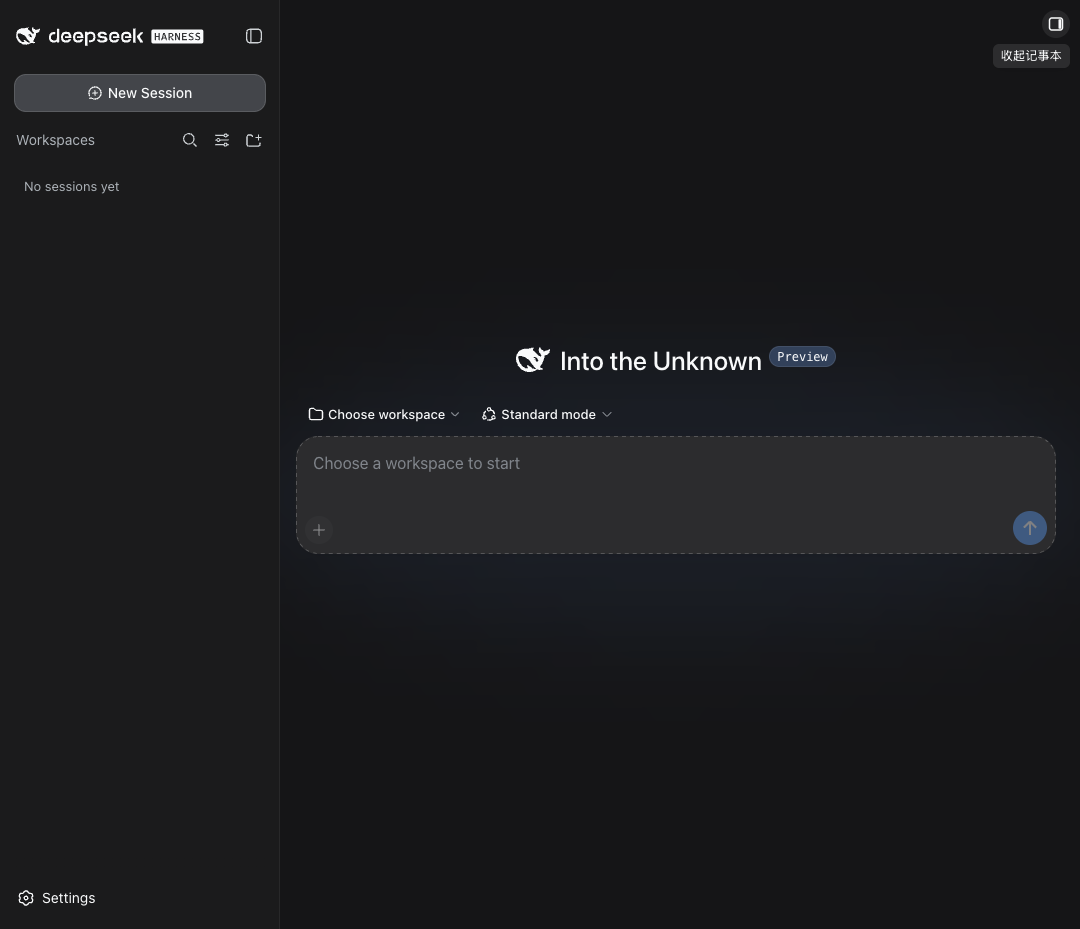 |
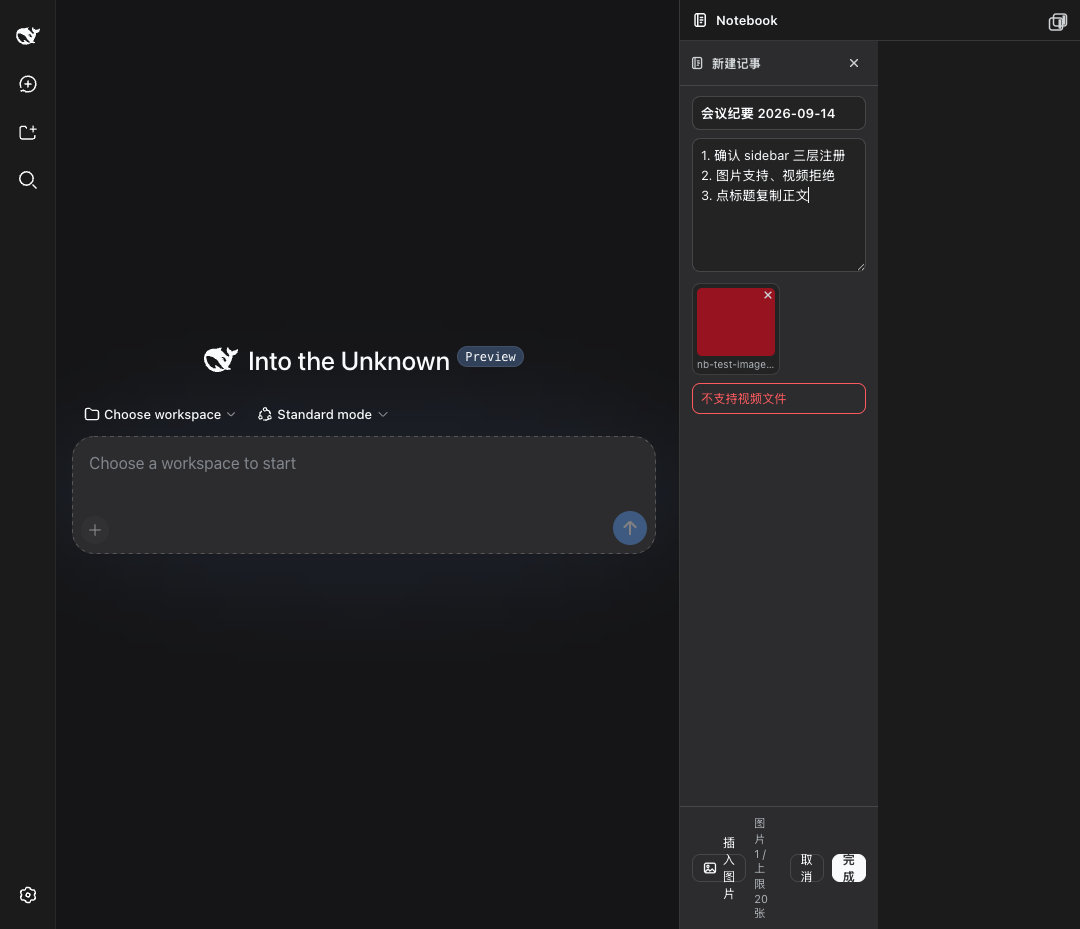 |
The Notebook list in the sidebar (+ in the top-right); expanding pushes the conversation column 400px |
The editor container: title, body and image thumbnails (paste / drop / picker) |
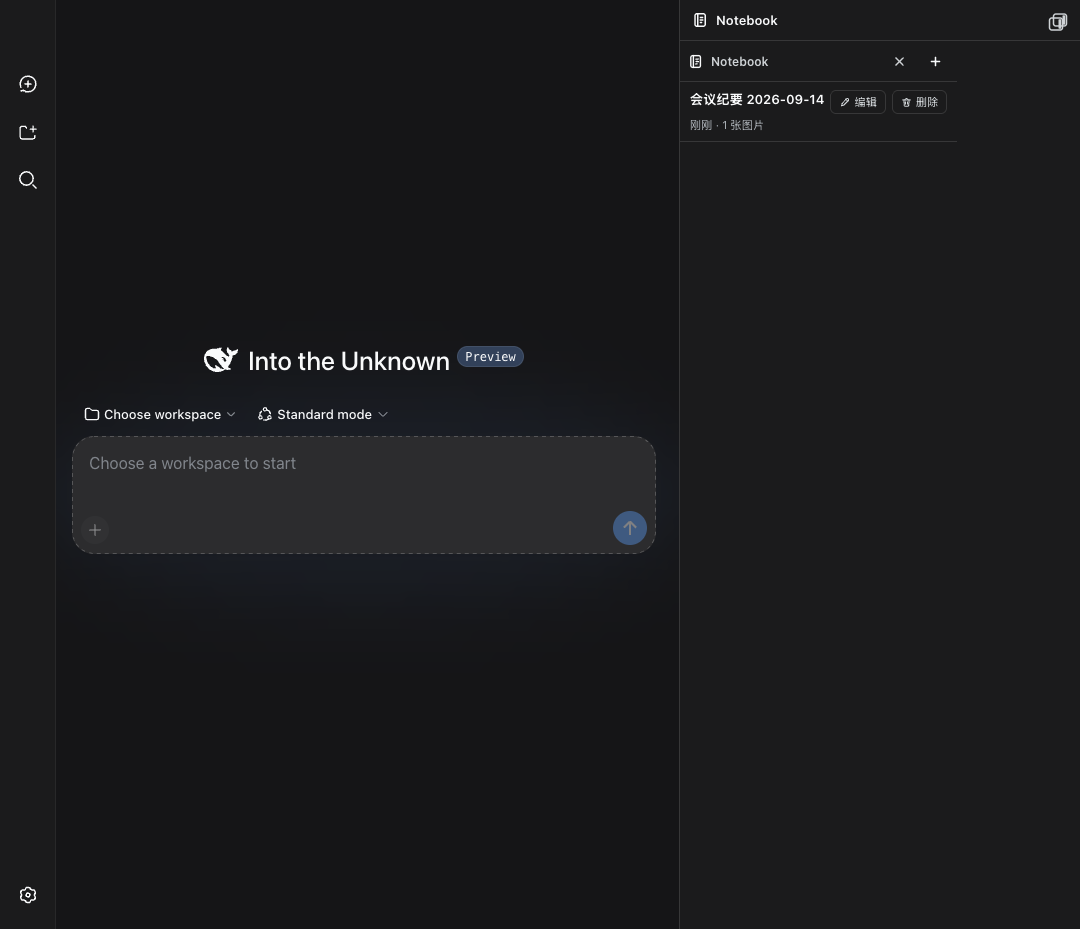 |
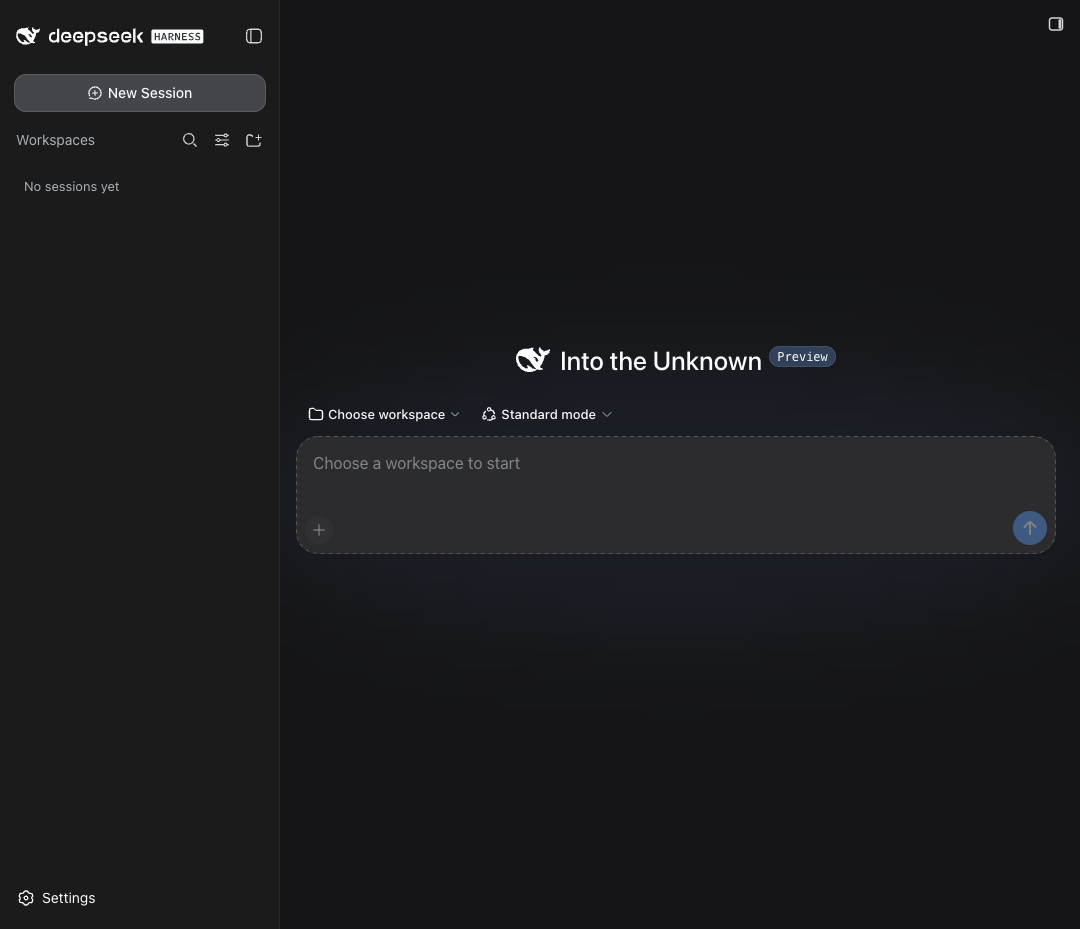 |
| The “body copied” toast after clicking a title — the body only, never the title | The self-drawn panel (tier 3): the toggle is pinned to the viewport's top-right corner |
A fourth shot shows the plugin folded into dsh-better-sidebar instead — see Relationship to dsh-better-sidebar:
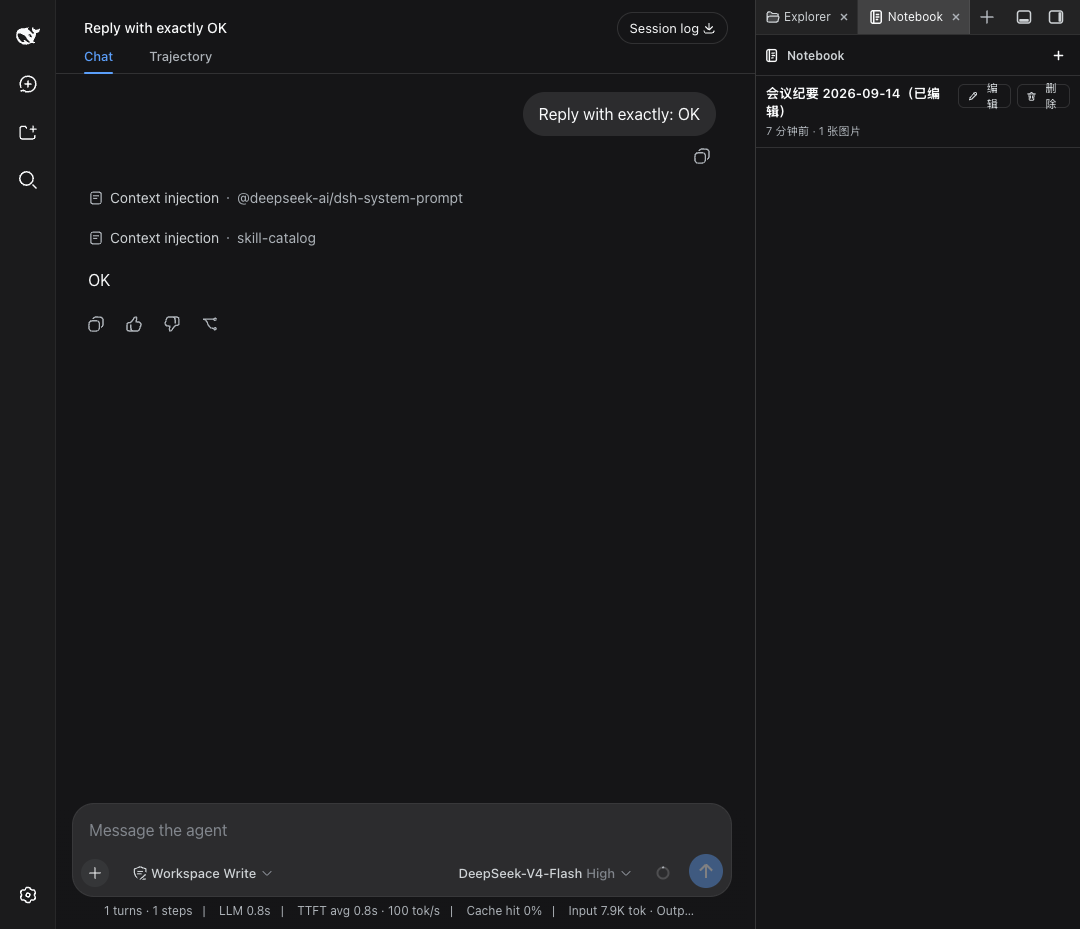
Install
Requirements
| DSH | >=0.1.1-rc.2 |
| Node | >=20 |
| Package manager | pnpm — this repo does not support npm |
Option 1 — install from the repository
dsh plugin --profile web add github:wyzh0117/dsh-notebook
While developing, never restart the DSH instance you are working in (e.g. the Web GUI on port 3080 — restarting it kills the current session). For a real end-to-end check, start an isolated environment instead:
DSH_HOME=/tmp/dshnb-home npx -y --package @deepseek-ai/dsh dsh web --port 3099
Option 2 — build from source (development)
git clone https://github.com/wyzh0117/dsh-notebook.git
cd dsh-notebook
pnpm install
pnpm build            # emits lib/index.js, lib/client.js, lib/types/**

# mount it into a DSH profile (the web profile here)
dsh plugin --profile web add "link:$PWD"
The manual equivalent — in ~/.dsh/profiles/web/package.json:
{
  "dependencies": { "dsh-notebook": "link:/abs/path/to/dsh-notebook" },
  "dsh": { "profile": { "bundles": [ /* … */, "dsh-notebook" ] } }
}
then run pnpm install inside the profile directory. dsh.profile.bundles must contain dsh-notebook,
otherwise the plugin is never loaded.
Usage
- Expand the right sidebar and open Notebook.
- Click the
+in the top-right corner — the editor container opens inside the panel. - Type a title and a body; add pictures by pasting or dropping them, or with “Insert image”.
- Videos are rejected with “video files are not supported”; a single image is capped at 10 MB and a note at 20 images (adjustable in settings).
- Click Done (or
Cmd/Ctrl+Enter) — the container closes and the note is filed under its title. - Click the title text — the body (never the title) goes to your clipboard, with a “body copied (N chars)” toast. Clicking a title is a pure copy: the v1.1 composer attachment bridge exists but has no UI entry point (see the next section).
- To let the model read a note, type
@in the composer and pick it under the “Notebook” heading, or clickReferenceat the end of its row — both insert one atomic reference chip, and only the body reaches the model (the title is never sent). - Use
Editat the end of the row to load that note into the same container;Deleteremoves the note and its attachment directory. - To see the notebook automatically in every new session, turn on “Open the notebook for new sessions” in settings (off by default; all three tiers honour it).
Compatibility
| DSH | Minimum supported >=0.1.1-rc.2; the development machine runs 0.1.5-rc.2 with @deepseek-ai/dsh-client-ui-sidebar-right installed, so the native right sidebar exists and tier 1 is the live tier here (tier 1 needs DSH ≥ 0.1.5-rc.1 plus that package) |
| Node | >=20 (development and build) |
dsh-better-sidebar |
Optional. Tier 2 targets 0.4.0–0.18.x; 0.19+ is handled by tier 1 |
| Optional DSH plugins | When conversation (the session composer), inputTriggers (the @ pipeline) or sessions (the session list) is missing, the matching integration simply turns off and the v1 behaviour returns |
Version adaptation — the three tiers
This is the core design, and it is what makes one artifact work across DSH releases that moved the right column between owners.
DSH's right column changed owner around 0.1.5-rc.1. Before that, plugins such as dsh-better-sidebar drew it themselves;
afterwards DSH owns it and plugins register tabs through ctx.sidebarRightTabs. So the client probes once and settles on
one of three tiers — at most one Notebook entry may exist on the page at any moment:
| Priority | Tier | Trigger | Registration |
|---|---|---|---|
| 1 | native |
ctx.get('sidebarRightTabs') exists (DSH ≥ 0.1.5-rc.1) |
Two-phase native registration: sidebarRightTabs.register({ id, kind, priority:'extension', title, guide }), then the tab body into the keyed slot sidebar.right.pane.tab (same id as the key); plus the global settings.section seat and the “auto-open for new sessions” watcher |
| 2 | service |
ctx.get('betterSidebar') exists (better-sidebar 0.4.0–0.18.x and similar products) |
ctx.betterSidebar.registerTab({ id:'dsh-notebook:notebook', …, single:true, settings:{ pluginToggles, render } }) |
| 3 | standalone |
neither of the above | Draws its own right panel (UI matched to dsh-better-sidebar 0.12.1) and registers the same global settings seat (settings.section) |
Deliberate choices:
export const inject = ['slots', 'locale']—betterSidebaris never listed ininject. A missing service ininjectmeans the plugin never activates, which would kill tier 3 entirely.- Detection is “sync first, async fallback”: when both
ctx.getcalls miss, the plugin registersctx.inject([...], cb)observers and arms a 700 ms fallback timer; if no tier has appeared when it fires, standalone is mounted. - Late upgrade: if standalone is already mounted and a service shows up afterwards, standalone is torn down first and the service registration happens after it — the two are never live at once.
- Every registration sits inside
ctx.effect(() => { …; return dispose }), so HMR and disable are clean and a second activation never throwsalready registered.
The tier-3 self-drawn panel (matched to better-sidebar 0.12.1)
| Item | Spec |
|---|---|
| Expand button | A 28×28 button pinned to the viewport's top-right corner, 16 px linear panel icon, ~500 ms delayed tooltip, aria-label following the expanded state |
| Panel geometry | PANEL_MIN=280 / PANEL_MAX=640 / PANEL_DEFAULT=400, clamped with Math.min(max, Math.max(280, round(w))) |
| Width drag | A 6 px grab strip on the panel's left edge; setPointerCapture then track the clientX delta |
| Narrow viewport | innerWidth < 768 collapses to a full-width 100vw drawer with no drag strip |
| Layout push | Sets --dsh-notebook-width plus data-dsh-notebook-collapsed / data-dsh-notebook-dragging, consumed by one namespaced <style> tag that is removed on dispose |
| Collapse | The panel stays mounted and slides out (translateX(100%)); visibility: hidden only after the transition ends |
| Persistence | Open state and width live in localStorage (dsh-notebook:open / dsh-notebook:width, every access wrapped in try/catch) |
| Reduced motion | Honours @media (prefers-reduced-motion: reduce) |
Settings
All three tiers share one definition, whose source of truth is the host's NotebookDoc.prefs
(consistent across tiers and browsers). Reads and writes always go through PATCH /notebook/api/prefs —
tier 2 deliberately does not use better-sidebar's own pluginSettings, which would let the tiers drift apart.
| Key | Type | Default | Meaning |
|---|---|---|---|
sortOrder |
'updated' | 'created' | 'title' |
'updated' |
List ordering: recently updated / recently created / title ascending |
copyImagesAsName |
boolean | true |
When copying, render images as a [image: <name>] line |
maxImagesPerNote |
number | 20 |
Image cap per note (1–100) |
confirmDelete |
boolean | true |
Ask before deleting |
openOnStart |
boolean | false |
tier 3 only: expand the sidebar on DSH startup |
autoOpenOnNewSession |
boolean | false |
Open the Notebook page whenever a session becomes current (all three tiers honour it; off by default, nothing pops up at page load) |
Where they surface: tiers 1 and 3 register the same global settings section (settings.section, shared through
hosts/settingsSeat.ts), so both tiers expose identical fields and copy; tier 2 goes through
registerTab({ settings: { pluginToggles, render } }) — its declarative inventory is now five rows (every preference except
openOnStart, which only means something in the standalone tier) while the panel it renders is the same one.
Every edit travels through PATCH /notebook/api/prefs into NotebookDoc.prefs (the host validates every key).
DSH session integration (v1.1)
Every seam here is public and entirely optional: the client bundle can only require the module-table entries, never import
a DSH UI package, so every member is duck-typed and every call is guarded — a host without ctx.conversation /
ctx.inputTriggers / ctx.sessions merely loses one capability and falls back to the v1 behaviour, never to an error.
Two capabilities are user-visible: @ references (§2) and “auto-open for new sessions” (§3). A third, the composer attachment
bridge (§1), is implemented, unit-tested and deliberately unwired — no UI calls it.
1. The composer attachment bridge (implemented, unwired)
Product decision (2026-09-15): clicking a title must only copy, never write into the composer on its own. Its only entry point was therefore removed: the title action in
NotebookViewishandleCopyBody(a plainbuildClipboardText+copyText) and no longer callsattachImages;composer.tscarries the same WIRING NOTE onNotebookComposer. The code and its tests are kept on purpose — the seams are the expensive part and they are already covered — waiting for an explicit action of their own.
What the bridge does (for a future caller, and why it is worth keeping):
attachImages(note): resolve the target (a current session fromctx.sessions, thectx.conversationservice and that session's input facade) → re-read the stored bytes over the plugin's ownGET /notebook/api/attachments/<noteId>/<file>route intoFiles →ctx.conversation.createDrafts(sessionId, files)to mint browser-owned draft attachments →input.addAttachments(ids)for the rail. The images live in the draft only and upload when the prompt is sent; a rail refusal releases the drafts throughreleaseDraftAttachments(no object URL or upload outlives the attempt). Formats the composer cannot take (not SVG — only png / jpeg / webp / gif) count asskipped, unreadable files asfailed, and a batch that inserts nothing reportsno-target/no-images/fetch-failed.appendText(text): writesbuildBodyText(note)(every image marker removed, so the rail is not duplicated) into the draft, preferring the session-scopedslash/input-insert-text(spliced at a caret span, so@-chips already in the draft keep their identity), then the facade's owninsertText, and only as a last resort a whole-draftsetDraftrebuild.- The path has no UI entry point: the
attached/attachedPartial/attachSkipped/attachReadFailed/attachedBodySkippedtoasts were removed fromlocales.tstogether with it (the last leftover key,attachFailed, has since been removed too, so the final artifact carries no attachment toast at all). - Because the title action is a pure copy, this bridge does not affect
@references, which ride a different seam (below).
2. The @ source and the “Reference” button
- The plugin registers a
@source nameddsh-notebookthroughctx.inputTriggers.registerSource(order: 20; the built-in source sits at 0), so typing@lists notebook entries next to files and sessions. Each row shows the title plus a body snippet (markers dropped, whitespace collapsed, truncated at 60 characters) under the localized “Notebook” heading. Candidates are filtered case-insensitively on title and body, newest update first, at most 8 rows; an aborted query or a failed read yields no rows (it never breaks the menu that also lists files and sessions). A refused registration (an HMR predecessor that has not unloaded yet, and the source name is the serialization routing key so it cannot be renamed) is retried every 500 ms, up to five times, before the plugin gives up with a warning. - Picking a row inserts an atomic inline chip (labelled with the title) whose clipboard/persistence form is the canonical mention
@[title](dsh-notebook:<noteId>)(brackets are stripped out of the label). - At send time the trigger pipeline asks the source's codec to serialize each chip occurrence: the plugin returns the note's
body only — the title is deliberately never sent — with each image marker rendered as one
[image: <name>]line. - The failure policy mirrors the pipeline's own contract: a deleted note serializes to nothing (the reference is simply gone and the
send proceeds), while a real read failure rejects — the send is blocked with a visible error instead of silently downgrading the
mention to
@title. - The in-row “Reference” button takes the same road: it inserts the same chip through the session-scoped
slash/input-insert-referenceevent (spliced at a caret span, so the chip stays a chip), and falls back to inserting the note's body text when that path is unavailable. With no reachable composer it toastsrefUnavailable(“No composer is available in this session”) rather than pretending it worked. - The three row actions (Reference / Edit / Delete) now wrap (
flexWrap), so a title and its buttons stay readable in the narrowest panel.
3. Auto-open for new sessions (off by default)
| Item | Behaviour |
|---|---|
| Preference | autoOpenOnNewSession, default false, persisted with every other preference in the host's NotebookDoc.prefs |
| Tier | All three tiers wire it (attachSessionAutoOpen), each with its own gesture; where a carrier cannot open anything (a sidebar product without openTab) the watcher simply stays inert rather than pretending |
| Trigger | The current session in the session list becomes a different one (a new session, or a switch) — a re-published snapshot of the same session does not count |
| Never fires | For the session that is already current when the plugin activates (no popup at page load), nor when current becomes null (the hero screen) |
| Retry | openTab throws (or open() reports failure) while the new session's sidebar surface is still mounting, so the open is retried at 0 / 200 / 500 / 1200 / 2500 ms and abandoned the moment the session changes again or the plugin unloads |
| Gesture | Tier 1: sidebarRight.openTab('dsh-notebook') plus toggleExpanded() while collapsed; tier 2: service.openTab({ type, title }); tier 3: the self-drawn panel's control.setOpen(true) |
| Settings seat | Tiers 1 and 3 register the same global settings section (settings.section, shared through hosts/settingsSeat.ts, carrying all six preferences); tier 2 goes through registerTab({ settings }), whose inventory is five rows (every preference except openOnStart) while the panel it renders is the same one |
Architecture
                     ┌─────────────────────────── browser ───────────────────────────┐
                     │ lib/client.js  (CJS module-table factory, id = "dsh-notebook")│
                     │  three-tier detect → native / service / standalone            │
                     │  NotebookView ─ NotebookEditor(one instance) ─ clipboard      │
                     │  composer bridge (ref chip; attach/body code unwired)         │
                     └──────────────────────────────┬────────────────────────────────┘
                                     fetch JSON      │
                     ┌──────────────────────────────┴────────────────────────────────┐
                     │ lib/index.js   (cordis plugin, ctx.webServer prefix)           │
                     │  routes.ts ─ store.ts (atomic write + mutex) ─ attachments.ts  │
                     └──────────────────────────────┬────────────────────────────────┘
                                                    │
                            $DSH_HOME/storages/notebook.json
                            $DSH_HOME/storages/notebook.json.bak
                            $DSH_HOME/storages/notebook-attachments/<noteId>/<attachmentId>.<ext>
In the native tier the tab body reads visibility from the slot's injected useTabInfo() hook (DSH 0.1.5-rc.2 renders a tab
without a plain props.tab.visible), so a hidden tab really does skip loading and polling — NotebookView issues no host
request at all while visible === false.
Host HTTP API
Registered on ctx.webServer (kind: 'prefix', path: '/notebook/api'), JSON over HTTP,
with Cache-Control: no-store on every response.
| Method | Path | Request | Response |
|---|---|---|---|
GET |
/notebook/api/state |
— | { doc, degraded? } |
POST |
/notebook/api/notes |
{ title, body, attachments: [{ name, mime, size, dataUrl }] } |
{ note } |
PATCH |
/notebook/api/notes/:id |
{ title?, body?, attachments? } |
{ note } |
DELETE |
/notebook/api/notes/:id |
— | { ok: true } |
PATCH |
/notebook/api/prefs |
Partial<NotebookPrefs> |
{ prefs } |
GET |
/notebook/api/attachments/:noteId/:file |
— | image bytes + Content-Type |
GET |
/notebook/api/health |
— | { ok, version, degraded } |
- Images are uploaded as dataURL (client-side
FileReader) and decoded by the host — no multipart parser dependency. - Security fence: only loopback requests are accepted (
req.socket.remoteAddress ∈ 127.0.0.1/::1) andOrigin/Hostmust be an allowed local origin, otherwise403; path parameters are traversal-checked (path.resolvemust stay inside the attachments root). Request bodies are capped at 32 MB (413beyond that). 400/403/404/413/415/500all return a structured{ error: { code, message } }.- The host re-checks for video (it does not trust the client) and answers
415.
On-disk layout
| Path | Contents |
|---|---|
$DSH_HOME/storages/notebook.json |
NotebookDoc (version: 1, notes[], prefs), written atomically |
$DSH_HOME/storages/notebook.json.bak |
The last known-good version; used first when the JSON is corrupt |
$DSH_HOME/storages/notebook-attachments/<noteId>/<attachmentId>.<ext> |
Image bytes |
$DSH_HOME resolution order: explicit injection > process.env.DSH_HOME (whitespace-only counts as unset) > ~/.dsh.
If .bak is corrupt too the store starts from an empty document and renames the broken file to notebook.json.corrupt-<ts>.
Relationship to dsh-better-sidebar
- This is not a fork of it, and it does not depend on it.
dsh-better-sidebarappears only inpeerDependencieswithoptional: true, and the source contains zero imports of it (it duck-typesctx.betterSidebarinstead), so two instances of it can never be pulled in. - With it installed (0.4.0–0.18.x): tier 2. Expanding its right sidebar shows Notebook in addition to its own
editor / git / terminal / browser tabs. We deliberately avoid its reserved ids
(
editorgitsubagentsidechatterminalbrowserdiff); ours isdsh-notebook:notebook. - With it at 0.19+ (the right column now belongs to DSH): tier 1 — the tab shows up in the column DSH itself draws.
- With no sidebar product at all: tier 3 — the plugin draws its own expandable right panel, matched to better-sidebar 0.12.1 (button placement, panel width and dragging, full-width narrow mode, collapse animation).
Known limitations (deliberately out of scope for v1 / v1.1)
- No video / audio or other rich media — an explicit requirement. Both the client and the host reject it.
- No multi-user, cloud sync, sharing, live collaboration or AI auto-organising.
- No version history: only the most recent content is kept.
- Notes are global, not isolated per conversation.
- The body is plain text plus Markdown image markers (
), not rich text; no rich-text editor dependency is pulled in. - Tier-1's registration sequence is covered by
test/tier-detect.test.tswith a fake ctx and was checked against the 0.1.5-rc.2 real type declarations (see the header ofsrc/client/hosts/native.ts); this machine hasdsh-client-ui-sidebar-rightand tier 1 is the live tier, but the three v1.1 behaviours have not been clicked through a GUI (unit / component tests plus the live endpoint checks in Verification status). - SVG cannot ride the composer attachment bridge: the bridge accepts png/jpeg/webp/gif only (notes themselves still support SVG; this bridge simply will not take it). The bridge currently has no UI entry point — see DSH session integration.
- A reference sends the body, never the title: the title in
@[title](…)is a human-facing label and is deliberately dropped at serialization time; images become one[image: <name>]line. - An unsent
@reference degrades to a literal mention after a page reload: DSH persists an unsent draft as its clipboard projection inlocalStorage(dsh.conversation, per session), and the plugin has no host-side mention resolver —dsh-session:mentions are expanded by@deepseek-ai/dsh-session-referenceatagent/pre-step, a seam this plugin does not hook — so after a reload the model receives the literal text@[title](dsh-notebook:<noteId>)instead of the note body. Workaround: send before reloading, or re-insert the reference. A host-half expander on the sameagent/pre-stepseam is the identified fix and is deliberately left out of v1.1. - “Open the notebook for new sessions” is inert on a carrier that cannot open anything: all three tiers wire the same
watcher, but a sidebar product without
openTabnever opens anything (and never pretends it did). - The session-integration capabilities depend on the host: without the conversation / input-trigger / sessions services the plugin falls back to the v1 behaviour (clipboard copy, no Reference button).
- DSH source is never modified (hard constraint).
FAQ
I dropped an mp4 — nothing happened. v1 does not support video. Both the client and the host reject it and show “video files are not supported”.
Why does the copied body contain [image: name] instead of the picture?
The clipboard gets plain text; images are files on disk and cannot travel as text, so they become a filename line.
Turn copyImagesAsName off in settings to drop the markers entirely instead.
Does clicking a title send the note's images into the composer?
No. v1.1 briefly wired image notes into the composer (images attached, body in the draft), but the product decision of
2026-09-15 turned the title click back into a pure copy, which removed its only entry point. The bridge code and its unit
tests are kept in composer.ts (waiting for an explicit action of its own), but no UI can trigger it today: clicking a title
always just copies the body to the clipboard.
Why did my @ reference turn into @[title](dsh-notebook:xxx) after a reload?
DSH persists an unsent draft as its clipboard projection in localStorage, and this plugin has no host-side mention resolver
(dsh-session: mentions are expanded by @deepseek-ai/dsh-session-reference at agent/pre-step, a seam the plugin does not
hook), so the chip degrades to literal text. Send before reloading, or re-insert the reference.
What does an @ reference actually send?
The body only. The chip shows the title, but serialization sends the body (each image marker becoming one [image: <name>] line);
the title is a human-facing label and is never handed to the model. A note that has been deleted contributes nothing, and a
real read failure blocks the send with a visible error.
Where are my notes stored? Is anything uploaded?
Entirely on your machine under $DSH_HOME/storages/. Nothing is uploaded anywhere, and the HTTP API only listens on loopback.
Can images get lost?
Not silently. A failed upload keeps the entry as an error item you can retry; if $DSH_HOME is not writable the
store degrades to memory and every API response carries degraded: true, which the UI surfaces as a banner.
Can I run this alongside better-sidebar? Yes — that is exactly tier 2. Notebook shows up as one entry inside its right sidebar.
Will tier 1 work on my machine?
If your DSH is older than 0.1.5-rc.1 there is no ctx.sidebarRightTabs, so the plugin falls back to tier 2 or tier 3.
pnpm install fails with ERR_PNPM_NO_MATCHING_VERSION: @deepseek-ai/dsh-*?
That is pnpm auto-installing peers. This repo's root pnpm-workspace.yaml sets autoInstallPeers: false
(pnpm 11 reads project settings from pnpm-workspace.yaml); add the same setting
if you replicate the package config elsewhere.
Development
pnpm install        # pnpm only; npm is unsupported in this repo
pnpm typecheck      # tsc --noEmit
pnpm test           # vitest run (node env for the host half, jsdom for *.test.tsx)
pnpm build          # tsc -p tsconfig.build.json && tsdown → lib/index.js + lib/client.js + lib/types/**
pnpm watch          # tsdown --watch
The repo root carries a pnpm-workspace.yaml whose single setting is autoInstallPeers: false. Why: dsh-better-sidebar is an optional peer,
pnpm tries to resolve it anyway, picks 0.19.x, and then cannot satisfy that package's @deepseek-ai/* peer ranges
(^0.1.5) — npm only publishes those as prereleases (0.1.5-rc.2), and semver never matches a prerelease against a
non-prerelease range, so the install dies with ERR_PNPM_NO_MATCHING_VERSION. Every peer this repo builds against is
an explicit devDependencies entry, so disabling peer auto-install costs nothing.
The client artifact is not plain ESM — it is a CJS closure factory registered with the global module loader:
window.__ModuleLoader__.load({ id: "dsh-notebook", factory: (require) => {
  var module = { exports: {} }; var exports = module.exports;
  /* …bundled CJS code… */
  exports.apply = apply; exports.inject = inject;
  return module.exports;
} });
Therefore src/client/** may not import node:*, and may not import any @deepseek-ai/* package as a
value except the module-table entries (react, react/jsx-runtime, react-dom, react-dom/client,
@deepseek-ai/dsh-client-ui-slots, @deepseek-ai/dsh-client-ui-primitives). codeSplitting: false is required too —
the factory's require cannot resolve relative chunk URLs.
Verification status
Checked live in an isolated environment (DSH_HOME=/tmp/dshnb-home, never against the instance in use); the tier 3 / tier 2
rows are records from the 0.1.1-rc.2 era, while the last two rows are the currently running 3080 instance (DSH 0.1.5-rc.2):
| Item | How | Result |
|---|---|---|
tsc --noEmit |
whole repo | 0 errors |
| Unit / component tests | vitest run |
164 passed (12 files) |
| Build | tsc -p tsconfig.build.json && tsdown |
lib/index.js (ESM) + lib/client.js (CJS) + lib/client.js.map + lib/types/** |
| Client bundle shape | CI executes lib/client.js against a stub require |
id=dsh-notebook, exports=apply,inject,…, inject===['slots','locale'], zero node: requires |
| Tier 3 (no sidebar product) | real browser | toggle pinned to the viewport's top-right corner (top:10,right:innerWidth-10, 28×28); expanding sets --dsh-notebook-width: 400px and pushes #root by 400px; 6 px drag strip on the left edge; collapse animates translateX(102%) + visibility:hidden with the push back to zero |
| Tier 3, the core flow | real browser, item by item | + → exactly one editor container; title and body written; pasted png accepted, pasted mp4 rejected with “video files are not supported”; “Done” closes it and files the note under its title; clicking the title put the body (no title) on the clipboard with images as [image: nb-test-image.png] and a “body copied (67 chars)” toast; “Edit” reopened the same container with title, body and thumbnails restored |
Tier 2 (dsh-better-sidebar@0.12.1) |
real browser | the self-drawn panel is not mounted (detection settles on the service tier); better-sidebar's “New tab” shows Notebook next to Explorer / Source Control / Tasks / Terminal / Browser, rendering this plugin inside its own panel against the same global notes |
| Persistence | restart + reinstall through another channel | notebook.json, .bak and notebook-attachments/<noteId>/<image>.png land correctly; data survives a release-tarball install and the attachment route answers 200 image/png |
| Release artifact | release tarball into a clean profile | dsh plugin mounts it, host routes and client bundle both work |
| CI | GitHub Actions | green |
| v1.1 artifact is served (running 3080 instance) | GET /plugins/??dsh-notebook/client.js&rev=<framed hash> |
200; the served bytes carry slash/input-insert-reference, slash/input-insert-text, autoOpenOnNewSession, noteReferenceInsert, useTabInfo (plus the createDrafts / attachImages symbols of the retained-but-unwired bridge) — i.e. the v1.1 code really is in the artifact being served, while the retired attachment toasts (attachSkipped / attachReadFailed) no longer appear |
| v1.1 host routes are online | GET /notebook/api/state, GET /notebook/api/attachments/<noteId>/<file> |
state → 200 application/json with the real document; attachment → 200 image/png — the byte-fetch path the attachment bridge performs per image (the bridge is implemented but unwired, so no UI calls it) |
Tier 1 (the native right sidebar of DSH ≥ 0.1.5-rc.1) has not been clicked through a GUI: its registration sequence is
covered by test/tier-detect.test.ts with a fake ctx and was checked against the 0.1.5-rc.2 real type declarations (the
header of src/client/hosts/native.ts records this); this machine has dsh-client-ui-sidebar-right installed and tier 1 is
the live tier.
The user-visible v1.1 capabilities (@ reference + “Reference”, auto-open for new sessions) have not been clicked through a
GUI; their behaviour rests on unit / component tests. The composer attachment bridge has no UI entry point and is covered at
bridge level only (what the live instance did verify is the last two rows above: the artifact is served and the host routes
answer):
| Feature | Tests covering it | What they assert |
|---|---|---|
| Composer attachment bridge (implemented, unwired, no UI entry point) | test/composer.test.ts (31); test/view-actions.test.tsx (7) asserts the opposite |
Bridge level: target resolution (null without the conversation service, a current session or a scope), stored images re-read into Files, the createDrafts + addAttachments call sequence, drafts released on refusal, SVG skipped, the image cap honoured, the three text-write paths (scoped event → insertText → setDraft), the exact detect-span math (including a chip with empty clipboard text), and no invented success without a target or insertable images. UI level: clicking a title copies and leaves the composer completely alone (an image note too), with the same copy when no bridge exists |
@ reference + “Reference” |
test/reference.test.ts (17) + test/view-actions.test.tsx (7) |
registerSource registers exactly once and disposes, a refused registration retried within the budget and reported once it is exhausted, candidate filtering / ordering / the 8-row cap / the section, onPick's chip and canonical mention, serialization carrying the body and never the title, a deleted note serializing to nothing, a real read failure propagating, and the row button inserting a reference or reporting refUnavailable |
| Auto-open for new sessions | test/auto-open.test.ts (11) + test/tier-detect.test.ts (14) + test/native-tab-body.test.tsx (3) |
nothing for the session already current at activation, once per change (not per snapshot), nothing while the preference keeps its false default, retries at 0 / 200 / 500 / 1200 / 2500 ms while the surface is unmounted and abandonment when the session changes again, silence without ctx.sessions, each tier wiring its own open gesture (native openTab / sidebar openTab / the self-drawn panel's setOpen), the native tab body reading visibility from the injected useTabInfo() hook (hidden really means no load and no polling), and mergePrefs applying only present keys |
One drift guard is worth naming: test/routes.test.ts's “accepts EVERY preference key the plugin exposes” asserts that the
key set accepted by PATCH /notebook/api/prefs equals Object.keys(DEFAULT_PREFS) — it is what caught the real bug where
/prefs silently dropped autoOpenOnNewSession.
The DSH seams these features rely on (ctx.sessions, ctx.conversation.createDrafts / input.for(actx), the
session-scoped slash/input-insert-reference / slash/input-insert-text, ctx.inputTriggers.registerSource) were read
from DSH 0.1.5-rc.2's published client packages (type declarations and implementation), not confirmed by clicking
through a live GUI: this machine also runs 0.1.5-rc.2 with dsh-client-ui-conversation /
dsh-client-ui-input-trigger / dsh-client-ui-sidebar-right all present, and the three features above are still guaranteed
by unit / component tests alone (the live checks covered the served artifact and the host endpoints, nothing more).
Contributing
Issues and pull requests are welcome. Two house rules come first:
- pnpm only. This repo does not support
npmoryarn; a lockfile mismatch caused by another package manager is not something we can act on. - DSH source is never modified. That is a hard constraint of the project, not a preference.
The local gate
pnpm install
pnpm typecheck   # tsc --noEmit
pnpm test        # vitest run
pnpm build
CI runs exactly these on Node 22 — pnpm 11 itself needs Node ≥ 22.13 for the toolchain, while the plugin still runs on
Node ≥ 20, which is what engines declares. CI additionally executes lib/client.js against a stub require to assert the
bundle shape, because a client bundle that quietly requires a node: builtin fails only at runtime in the browser.
Reporting a bug
Use the bug report template. The fields that decide how fast a report can be acted
on are the DSH version, the dsh-better-sidebar version (if installed), and which tier was active — native, service
or standalone. A report that names the tier it landed on removes the first round trip.
Sending a PR
The PR template carries the checklist. In short:
- paste the real
typecheck/test/buildoutput — an unchecked box with a one-line reason beats a checked box nobody verified; - say which parts the change touches: tier 1
native, tier 2service, tier 3standalone, the host half (src/index.ts,src/store.ts,src/attachments.ts,src/routes.ts), or build / CI / docs only; - update both READMEs when user-visible behaviour or a setting changes.
Constraints a PR must not break
- no video / audio support path — v1 explicitly excludes rich media, and both the client and the host enforce the rejection;
cordis(bare) must never be added todependencies/peerDependencies/optionalDependencies;- no
preinstall/install/postinstall/preparescript; - in
src/client/**: nonode:*import, and no@deepseek-ai/*value import outside the shared module table (react,react/jsx-runtime,react-dom,react-dom/client,@deepseek-ai/dsh-client-ui-slots,@deepseek-ai/dsh-client-ui-primitives); - the registered client bundle id must stay equal to the package name (
dsh-notebook).
Version history
| Milestone | State | Highlights |
|---|---|---|
| v0.1.0 | tagged | The notebook itself: create / edit / delete, title + body, images with videos rejected, click-a-title-to-copy, the single reusable editor container, three-tier adaptation, atomic writes with .bak recovery, loopback-only HTTP API. |
| v1.1 | merged on main, not yet tagged |
DSH session integration: @ references and the in-row “Reference” button, auto-open for new sessions (off by default). The composer attachment bridge landed as code plus unit tests with no UI entry point — clicking a title stays a pure copy. |
package.json still declares 0.1.0; the v1.1 work is on main ahead of a version bump.
License
MIT © 2026 wyzh0117
No comments yet. Be the first to write one.