READMESource: master@3096666b
dsh-generative-ui
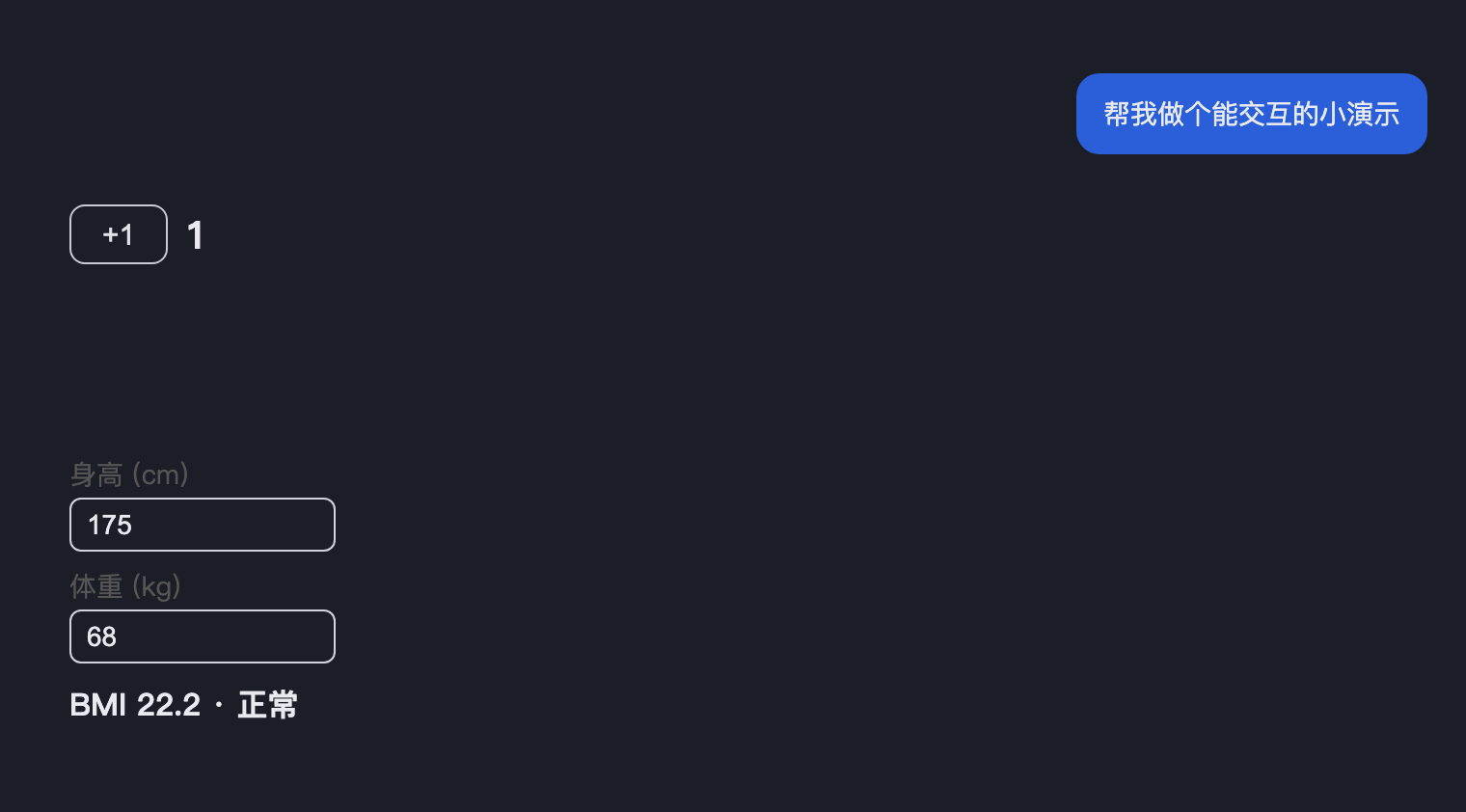
Let the AI output interactive HTML components (Generative UI) directly in the DSH chat flow.
The agent writes a fenced code block in its reply:
```generative-ui
<!-- title: Example: counter -->
<button id="plus">+1</button> <span id="n">0</span>
<script>let n=0;plus.onclick=()=>{n++;n.textContent=n}</script>
```
The plugin extracts every artifact from that turn and renders it as a sandboxed
card below the message: an <iframe sandbox="allow-scripts"> (no same-origin)
— the artifact is fully interactive, but can never touch the host page,
cookies, or local storage.
Design
- Pure client-side: no backend, no storage. Artifacts live in the session message text — the session is the store; there is no second copy of state and nothing to sync.
- The host half does one thing: broadcast the fenced-block convention to every
agent via
systemPrompt.section. - The browser half uses a
uiConversation.eventsaccumulator to extract artifacts fromassistant/messageevents (the same turn-accumulator pattern as dsh-taskboard), projects them onto the turn location, and renders the cards through theconversation.chat.turnTailslot. - Adaptive height: a bootstrap injected into each artifact reports its height to the parent via ResizeObserver + postMessage; cards are clamped between 120–600px and scroll internally beyond that.
Install
dsh plugin --profile desktop add link:<this-directory>
# and add @ttmouse/dsh-generative-ui to dsh.profile.bundles in the profile
# package.json; restart the desktop app (the host half registers the prompt
# section; client.js is read from disk per request)
Develop
npm install && npm run build       # produces lib/client.js + lib/index.mjs
npm test                           # unit + e2e (headless Chromium)
npm run screenshot                 # regenerate screenshot.png from the real client
Client changes take effect on page refresh; host-half changes (the system-prompt text) need an app restart.
License
MIT
No comments yet. Be the first to write one.