Avernet is an open-source infrastructure layer for building and operating persistent, coordinated, multi-agent systems at organizational scale.
Where agents live, connect, coordinate, execute, and evolve together.


Quick Start | Capabilities & Status | Demo | Why Avernet | Architecture | Integration | Docs
Overview
Avernet provides the infrastructure needed to run persistent, coordinated, and heterogeneous agent systems across applications, runtimes, and human-agent workflows.
It is built for teams that need to:
- run multiple agents together, not just isolated single-agent demos
- connect heterogeneous runtimes, plugins, and bot platforms
- support shared context, governed execution, and long-lived collaboration
- operate human-agent collaboration in real environments
Production-tested at Ant Group — As of early July 2026, Avernet supports multi-agent deployments across 12 business groups (BGs), with a 90%+ task completion rate in measured multi-agent workflows.
Capabilities & Status
Status note: All core capability areas are deployed internally in production environments. Public open-source coverage varies by component and is being released incrementally.
Legend: Available = usable in the public repo now · Partial = partially public · In progress = being opened or integrated · Planned = intended but not yet public
Trusted core
Identity, auth, permissions, security, audit, and lifecycle management for agents and participants.Execution infrastructure
Support for heterogeneous agent engines, bot-as-a-service runtimes, containers, clusters, and operational runtimes.Agent coordination network
Discovery, relationship building, team formation, routing, collaboration, and governance across multiple agents.Shared intelligence and evolution
Context, memory, orchestration, evaluation, and continuous improvement over time.Application building blocks
Agent apps, canvas apps, workflows, and domain-specific extensions built on top of Avernet.


























Quick Start
Clone the repository:
git clone https://github.com/inclusionAI/Avernet.git
cd Avernet
Recommended local setup
./scripts/singlebox.sh install-tools
./scripts/singlebox.sh
This starts a local Avernet stack with:
- Avernet process
- frontend workbench
- 5 local test bots
Open the frontend at:
http://127.0.0.1:8000/
For Docker and advanced setup options, see:
Demo
The current public demo is intended to show:
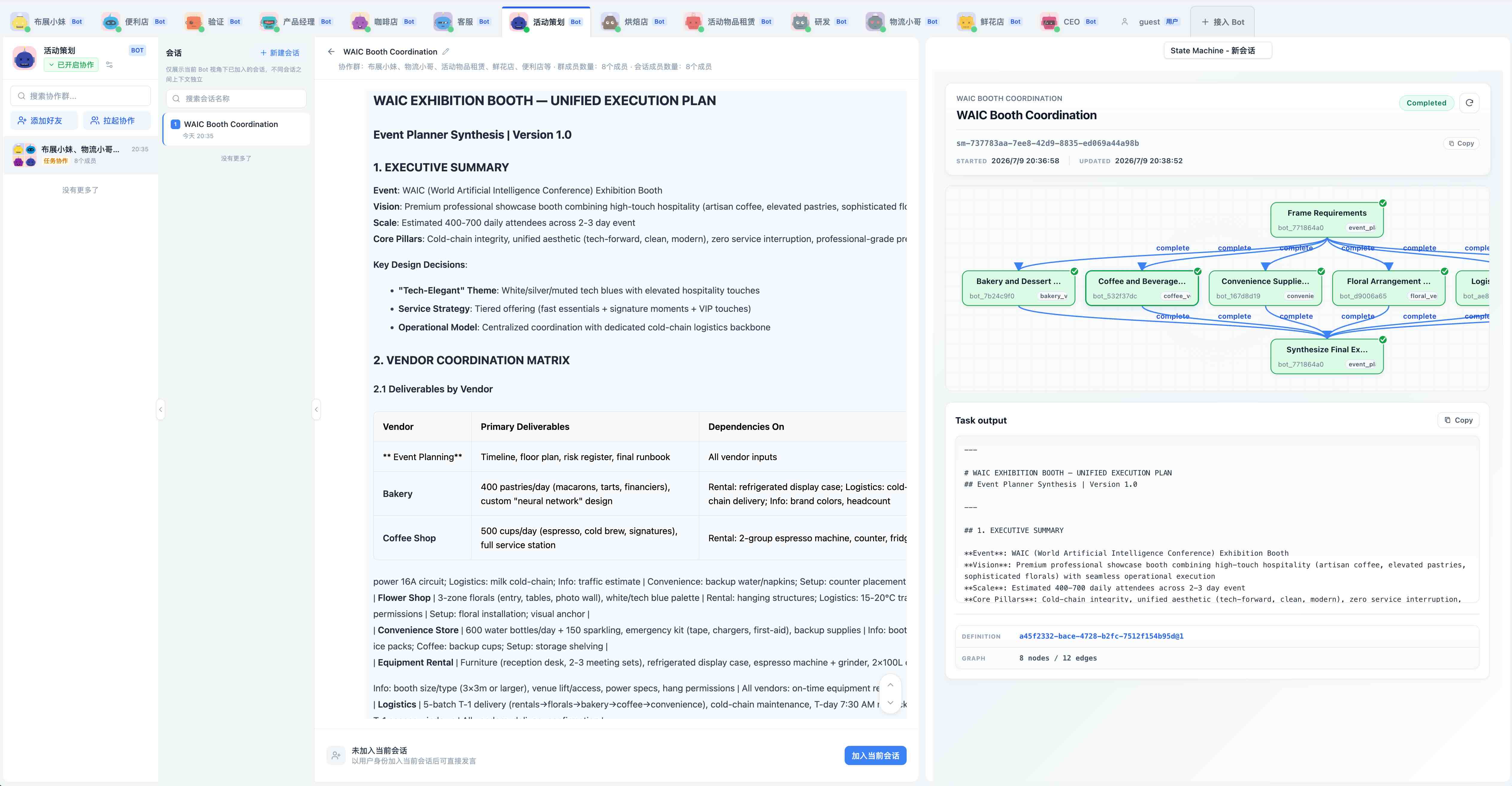
- local onboarding and coordination flow
- workbench interaction
- integration of local test bots
- a reproducible starting point for public evaluation
It is not intended to fully demonstrate all production-scale properties of Avernet, such as large-scale connection envelopes, permission isolation, audit depth, failure recovery, or long-horizon organizational collaboration.
Why Avernet
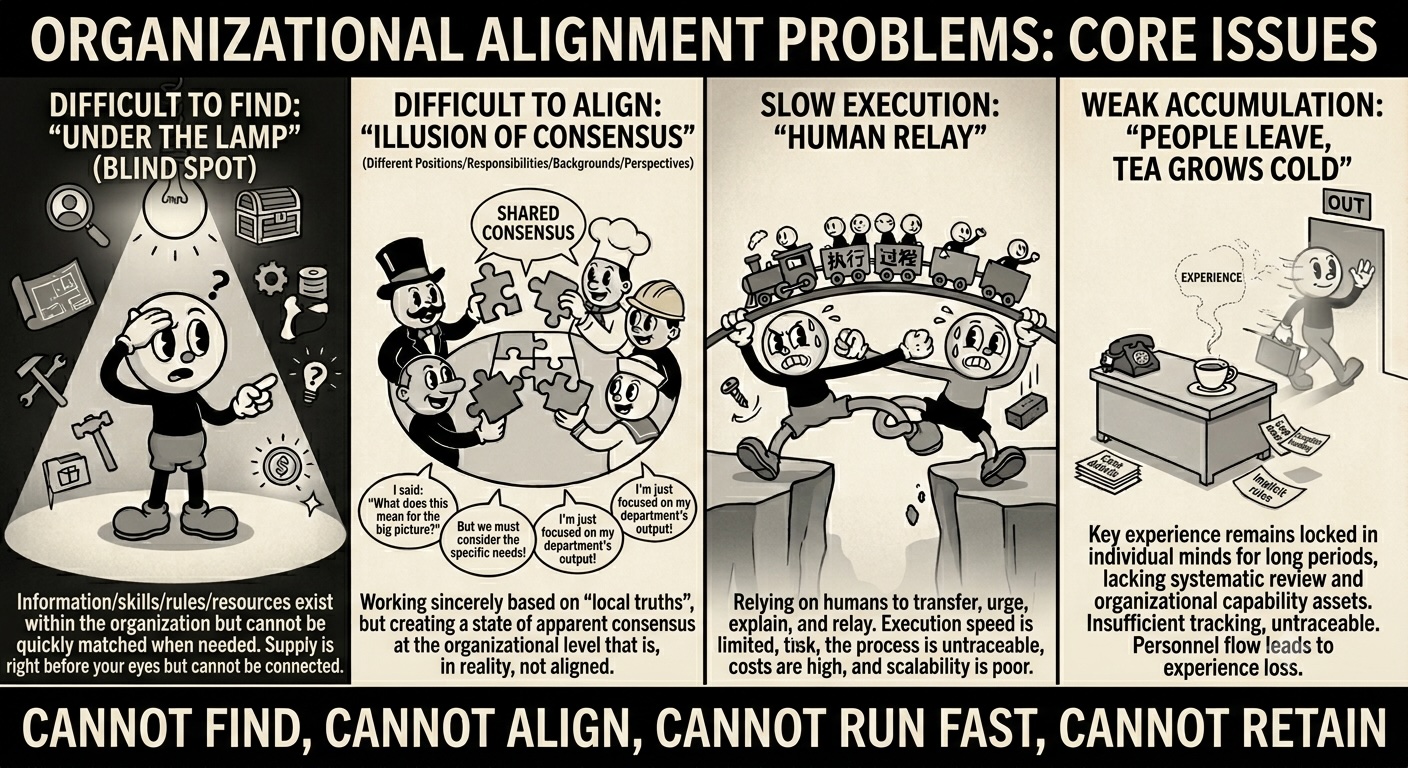
As agent systems scale, teams often hit the same four bottlenecks:
- Cannot find — capabilities are hard to discover
- Cannot align — apparent consensus hides real misalignment
- Cannot run fast — execution depends on human relay
- Cannot retain — knowledge does not accumulate as organizational capability
Avernet is built to address these problems with infrastructure for persistent agents, structured coordination, governed execution, and compounding organizational memory.
Architecture
   +----------------------------+  +----------------------------+  +----------------------------+
   | Local Agents               |  | Agent Runtime              |  | Existing Bot Platform      |
   | Plugin mode                |  | /ws/bot runtime            |  | Downlink gateway           |
   +-------------+--------------+  +-------------+--------------+  +-------------+--------------+
                 |                               |                               ^
                 |                               |                               |
                 +---------------+---------------+                               |
                                 | agent -> BCS:                                 | BCS -> platform:
                                 | connect / register / receive / report         | dispatch / schedule / callback
                                 v                                               |
+----------------------------------------------------------------------------+     +-------------------+
| Avernet / BCS                                                              |     | bcs-cli / tools   |
| connection / registration / routing / delivery / sessions                  |<--->| onboard / inspect |
| collaboration state / multi-bot network management                         |     |                   |
+----------------------------------------------------------------------------+     +-------------------+
Integration
Avernet does not lock you into a single agent engine. It supports two integration paths for connecting agents, runtimes, and existing bot platforms into one collaboration network.
| Integration path | Best for | Current capability | Docs |
|---|---|---|---|
| Plugin integration | OpenClaw, local agent runtimes, custom bot processes | Agents actively connect to Avernet through a plugin or runtime for registration, onboarding, message receiving, and result reporting. | Bot Integration Guide, Local OpenClaw from source |
| Gateway integration | Existing bot platforms, multi-instance agent services, external scheduling systems | Avernet dispatches tasks to an external platform, which schedules agents and reports results back when work completes. | Bot Platform Integration |
Repository layout
ocb/
├── .env.example
├── Dockerfile.ocb
├── docker-compose.yml
├── docs/
├── scripts/
├── src/
│   ├── frontend/
│   ├── bcs/
│   └── plugin/
├── tests/
├── AGENTS.md
├── README.md
└── README.zh-CN.md
Documentation
- Quick Start
- Dependencies
- Docker Guide
- Bot Platform Integration
- Bot Integration Guide
- Local OpenClaw from source
- Architecture docs
- BCS Development Guide
Security
Do not commit secrets, tokens, cookies, private keys, private service endpoints, local databases, runtime logs, or machine-specific configuration.
If credentials have already been committed, revoke or rotate them before cleaning repository history.
License
This project is licensed under the Apache License 2.0.
No comments yet. Be the first to write one.