dsh-memflow
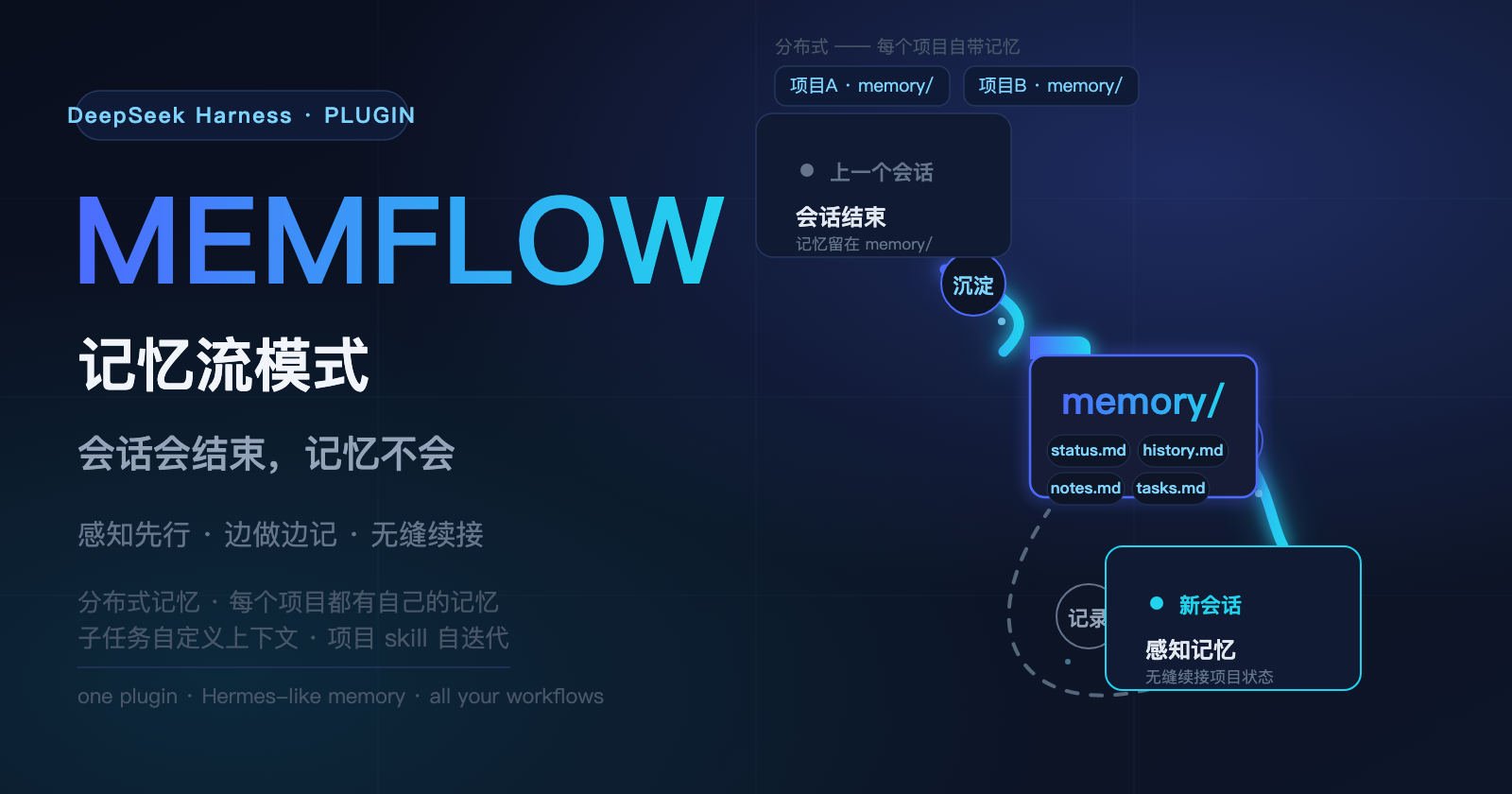
MEMFLOW 记忆流模式 —— DeepSeek Harness 的目录级上下文框架插件。
会话会结束,记忆不会:感知先行、边做边记、无缝续接。 目录即身份:
.dsh/context.yaml声明这个目录里「谁在工作」以及「开工前必须感知什么」。 记忆不是预设,是每个 agent loop 的基线要求。
0.3.0 的前提变化
0.2.x 把记忆做成一个用户主动挑选的 preset:选了「记忆流模式」才有记忆。0.3.0 放弃了这个前提。
记忆与身份不是一种模式,而是每个 agent loop 的基线要求。
因此身份与感知的来源从「预设」下移到「目录」:每个工作目录用 .dsh/context.yaml 声明自己的 systemPrompt 与 preload,任何在该目录打开的会话都机械地获得这套上下文——web、headless、被调度的子 agent 一视同仁,不经过 preset 服务。
# <工作目录>/.dsh/context.yaml
systemPrompt:            # 身份 / 协议 —— 作为 prompt section 注入
  - AGENT.md
  - ../shared/PROTOCOL.md
preload:                 # 感知 —— 作为会话首条 user message 注入
  - memory/status.md
  - memory/history.md
inherit: false           # 缺省;置 true 才向上合并祖先目录的声明(外层在前)
systemPrompt 文件在每次 prompt 组装时重新读取,改文件下一轮即生效;preload 文件拼成一条固定的首条 user message,每个会话只注入一次——感知先于第一个任务,且永不重投。
未声明的目录仍按 0.2.x 行为加载 memory/ 目录(legacy fallback),存量项目无需改动。声明存在时以声明为准。
协作能力目录与设备路径变量(0.5.0)
# <工作目录>/.dsh/context.yaml
agents:                         # profile 文件路径数组,不是目录或目标声明
  - ${pcagent_root}/agents/dsh/.dsh/profile.md
preload:
  - memory/${device_name}/status.md
agents 直接读取简短能力 profile,按实际继承链的祖先→子、列表顺序合成「协作能力目录」,置于普通 preload 之前。每项仅包含 === agent简介: <规范profile绝对路径> ===、推导的 cwd(.dsh 上级所属目录)及 profile 原文,不生成目录标题或来源声明行;外层仍为 工作目录前置上下文:。每项路径及 realpath 目标都必须严格为 .../.dsh/profile.md,不接受普通 a/profile.md 或任意 alias.md;不读取目标的 context/systemPrompt/memory,也不递归 agents,不写实体索引。现有文件使用 realpath 规范化(包括符号链接),不存在的路径使用绝对规范路径,首次出现保留。agents: [] 合法,表示本声明无协作依赖,不生成协作目录(不清除继承来的依赖)。非数组、空字符串元素、缺文件、空文件、目录、非法元素及路径变量错误均显式出现在 bootstrap。profile 与普通 preload 共用字节预算及截断提示。
目录沿现有 context-preload 首条消息持久化:旧会话不重投,fresh 获取新内容;memoryBootstrap: false 不读取 profile。ACP clean / normal 通过现有 ignoreDeclaration 隔离,不读取 agents 或 .device。
从声明所在目录(extra 路径从 cwd)向上找最近 .device,最多 64 级;新版只接受下列 YAML:
device_name: MAGIT00198
pcagent_root: /Users/cairui/PCAgent
两字段均为必填非空字符串;设备名必须是合法单目录名,根必须为本机可访问的绝对目录。最近的文件非法即诊断,不越过它找祖先。重复/未知字段非法;不兼容旧单行格式与 ${device},不以主机名兜底。
| 变量 | 解析值 |
|---|---|
${device_name} |
.device 的 device_name |
${pcagent_root} |
.device 的 pcagent_root |
${hostname} |
主机名去掉尾部 .local;独立于 .device |
统一对 agents/systemPrompt/preload 与 env/config extra 路径生效,每次解析实时求值;未知或未闭合变量显式诊断。不支持 env/glob/递归变量替换,文件内容不替换。
升级顺序:先刷新所有安装副本;协调修改 .device 和全部旧变量声明;Web 走标准入口重启一次。headless/task/acp 新进程立即加载新实现,切换窗口内不要新起依赖旧 ${device} 的会话。已有 bootstrap 不回写。
一个协议、两个载具
| 载具 | 作用 |
|---|---|
.dsh/context.yaml 声明 |
目录级身份与感知;显式写 inherit: true 才沿父目录向上合并(外层先注入) |
DSH_CONTEXT_* 环境变量 |
调度方的按次通道:为某一次调度追加上下文、替换声明、或整体忽略声明 |
这里没有 {{memflow_protocol}} 变量,也是有意为之。 0.3.0 移除了「插件自带一份协议全文并注入每个 prompt」这条通道:协议属于工作目录,不属于插件。要什么身份,就在该目录的 .dsh/context.yaml 的 systemPrompt 里声明(WORKFLOW.md / AGENT.md / 你自己的协议文件)。包内 MEMFLOW.md 仅作参考实现与文档,不再进入任何 prompt——需要它就把它列进声明。
这里没有 delegate 工具,是有意为之。 被调度的子 agent 就是「在另一个目录里打开的一个会话」——调度方设定它的 cwd,它便从那个目录的声明里自己组装身份与感知,走的是与其它任何会话完全相同的代码路径。若再提供一条「把准备好的 dossier 递给子 agent」的通道,就等于用两套发散的机制说同一件事。
按次调度参数
目录声明的是默认身份,调度方还需要能收窄某一次运行。进程外(ACP)provider 无法下推 persona / outputSchema / toolFilter(subagent 服务在 start 之前就会拒绝),唯一能穿过进程边界的通道是子进程环境变量:
| 变量 | 作用 |
|---|---|
DSH_CONTEXT_IGNORE=1 |
忽略所有声明(纯 headless,连 legacy memory/ 也不注入) |
DSH_CONTEXT_FILE=<abs> |
用指定声明文件替代目录发现 |
DSH_CONTEXT_SYSTEM_PROMPT=<paths> |
追加身份文件(换行或路径分隔符分隔) |
DSH_CONTEXT_PRELOAD=<paths> |
追加感知文件 |
DSH_CONTEXT_PARAMS=<json|text> |
本次调度参数,原文注入,排序在所有身份 section 之后(因此可收窄它们) |
用 DSH_* 前缀是有意为之:harness 的 scrubbedParentEnv() 会从环境继承中剥掉所有 DSH_* 名称,而显式 env 层在剥离之后合并——所以交给某个子 agent 的参数不会泄漏到它自己的孙 agent。按次调度真的只作用一次。
快速开始
# 安装(bundle 自动注册,首次需重启 dsh 进程加载)
dsh plugin --profile web add github:crwsr124/dsh-memflow
dsh plugin --profile headless add github:crwsr124/dsh-memflow

# 在项目里声明身份与感知
mkdir -p .dsh && cat > .dsh/context.yaml <<'YAML'
systemPrompt:
  - AGENT.md
preload:
  - memory/status.md
  - memory/history.md
YAML

# 任何会话在该目录打开即生效
dsh --profile headless "你的任务"
配置
插件行(row)config(在 profile cordis.patch.yml 按 id 覆盖):
| 键 | 默认 | 说明 |
|---|---|---|
declarationFile |
.dsh/context.yaml |
声明文件相对路径 |
discover |
nearest |
nearest = 从 cwd 向上找最近声明并按 inherit 续走;cwd = 只认 cwd 自己的声明 |
inherit(声明内键) |
false |
由声明文件自身控制是否继续向上合并;缺省不继承——一个目录的身份默认只由它自己说清楚,需要叠加祖先声明时显式写 true |
sectionOrderBase |
10 |
身份 section 起始 order(在 DEPLOYMENT_PERSONA 0 之后、PLAN_POLICY 500 之前) |
maxSections |
16 |
身份 section 槽位数上限(注册期固定,空槽渲染为空) |
systemPrompt / preload |
[] |
row 级追加文件,等价于 DSH_CONTEXT_* 的静态形式 |
ignoreDeclaration |
false |
整个 profile 忽略声明(纯 headless profile 用) |
allowEnvOverride |
true |
是否接受 DSH_CONTEXT_* 环境通道 |
legacyMemoryFallback |
true |
无声明目录回退加载 memory/(0.2.x 行为) |
memoryBootstrap |
true |
注入首条感知消息 |
memoryPriority |
['history','brick_index','notes','status','tasks'] |
legacy fallback 的文件优先序 |
perFileBytes |
不限 | 单文件 UTF-8 字节上限;仅显式设置时截断并标为受限快照 |
totalBytes |
不限 | 快照总 UTF-8 字节上限;同上 |
skipDelegated |
false |
设 true 则不给 delegationDepth > 0 的进程内子 agent 注入感知;默认注入,因为子 agent 与其它会话一样只是「某个目录里的一个会话」(旧名 includeDelegated: false 等价) |
suppressRoots |
[] |
抑制目录:这些项目根(按 .git 向上发现)完全不注入 |
0.3.0 移除了 protocolFile 与 rosterlessProtocol(协议全文通道已废,见上文);配置里残留这两个键无害,会被忽略。
memoryPerFileBytes / memoryTotalBytes 作为 perFileBytes / totalBytes 的旧名仍被接受。
目录结构
<工作目录>/
├── .dsh/
│   └── context.yaml     # 身份与感知声明(0.3.0 起的入口)
├── AGENT.md             # 该目录的 agent 身份 / 协议(由声明引用)
└── memory/              # 持久记忆
    ├── tasks.md         # 任务清单与状态
    ├── status.md        # 项目现状快照
    ├── history.md       # 工作记录
    ├── notes.md         # 实操笔记与陷阱
    ├── brick_index.md   # 可复用技能索引
    └── bricks/          # 可复用技能文档
实现说明
- 零
@deepseek-ai依赖(有意为之):profile 插件若携带与组合 row 重名的依赖(dsh-tools/dsh-subagent等),会遮蔽 host row 的模块解析导致 Symbol 分裂、首次工具调用即崩。本插件全部走注入服务(ctx.tools/ctx.subagents/ctx.get('jobs')/ctx.systemPrompt),工具定义与 YAML 子集解析器均手写。 - stdout 属于协议:ACP 部署下 stdout 是 JSON-RPC 帧通道,插件从不写 stdout,诊断只走
ctx.logger。 - 感知是框架保证,不是模型自觉:感知消息由
agent/pre-step瀑布机械注入(与 agent-instructions 同通道),去重依据是会话持久事件日志而非单轮 step。 - 声明解析出错不杀 loop:YAML 子集解析器带行号报错,
loadDeclaration捕获后告警并退化为「无声明」,不影响会话启动。 - 社区项目,与 DeepSeek 官方无隶属关系。
English
MEMFLOW — per-directory context composition for DeepSeek Harness (dsh).
0.3.0 changes the premise. Memory and identity are no longer a preset a user picks; they are a baseline requirement of every agent loop. A directory declares who works there and what must be perceived before work starts, and any session opened in that directory gets that composition mechanically — web, headless, or dispatched subagent alike, with no roster involved.
# <dir>/.dsh/context.yaml
systemPrompt: [AGENT.md]          # identity → ordered prompt sections, re-read per assembly
preload: [memory/status.md]       # perception → ONE fixed first user message, once per session
inherit: false                    # default: do not merge ancestors; set true to opt in
0.5.0 adds agents and strict YAML device descriptors. agents: [path/to/.dsh/profile.md] requires both the resolved path and its realpath target to have exactly the .../.dsh/profile.md form. It reads profiles directly before preload, with each entry formatted as === agent简介: <canonical absolute profile path> ===, followed by cwd (the owning directory above .dsh) and the profile body. The outer 工作目录前置上下文: heading remains; no catalog heading or source-declaration line is generated. Arbitrary profile files and alias.md are rejected. Inherited declarations are processed outermost-first, with canonical-path first-occurrence deduplication. Target declarations are never traversed; no index file is generated. Invalid, empty, or missing profiles produce explicit diagnostics. The catalog uses the existing once-per-session bootstrap snapshot and shared byte budget; clean/normal do not read it.
Paths support ${device_name}, ${pcagent_root}, and independent ${hostname}. The nearest .device must contain required YAML strings device_name (one legal directory name) and pcagent_root (accessible local absolute directory). Legacy single-line files and ${device} are not supported; missing/invalid descriptors and unknown variables produce explicit diagnostics, without hostname fallback. Expansion is path-only and re-evaluated, never applied to file content.
A dispatcher refines a single run through the child's environment — the only channel that survives a process boundary, since an out-of-process provider may not push persona:
DSH_CONTEXT_IGNORE=1              ignore declarations (pure headless)
DSH_CONTEXT_FILE=<abs>            use this declaration instead of discovery
DSH_CONTEXT_SYSTEM_PROMPT=<paths> extra identity files
DSH_CONTEXT_PRELOAD=<paths>       extra perception files
DSH_CONTEXT_PARAMS=<json|text>    this run's parameters, injected verbatim
DSH_* is the right namespace on purpose: the harness strips every DSH_* name from ambient inheritance and merges explicit env layers after the scrub, so a parameter handed to one child does not leak into that child's own grandchildren.
Directories without a declaration still load memory/ mechanically (0.2.x behavior), so existing projects keep working untouched.
Install:
dsh plugin --profile <name> add github:crwsr124/dsh-memflow
A community project, not affiliated with DeepSeek.
0.2.2 format v4 source compatibility (0.5.1)
Session format v4 forbids the retired kind: 'plugin' durable-message source. On a v4 session the bootstrap message now uses { kind: 'plugin:dsh-memflow', form }; v3 sessions keep the legacy wrapper. Bootstrap detection accepts both shapes, so a migrated v3 transcript is not re-injected.
No comments yet. Be the first to write one.