dsh-minimax-usage-pro
中文文档 | English
DSH (DeepSeek Harness) bundle plugin that exposes the user's MiniMax Token Plan usage data inside the Settings → 用量 page.
This is the pro edition of @floatingdeaming/minimax-usage@1.0.3. The
original bundle plugin only worked on dynamic plugins because the DSH host
runtime exposes harness.handle(...) only to dynamic plugins' vm sandboxes;
trusted bundle plugins received a plain cordis context and could not register
JSON-RPC handlers. That limitation surfaces as WARN: harness not available
in the original host log and an empty Settings section in the UI.
dsh-minimax-usage-pro keeps the same bundle-plugin shape but routes the
client→host traffic over a plain HTTP route on webServer instead of the
harness JSON-RPC system, so it works on DSH 0.1.0-rc.8 and any later
release that keeps the webServer service available.
Screenshots
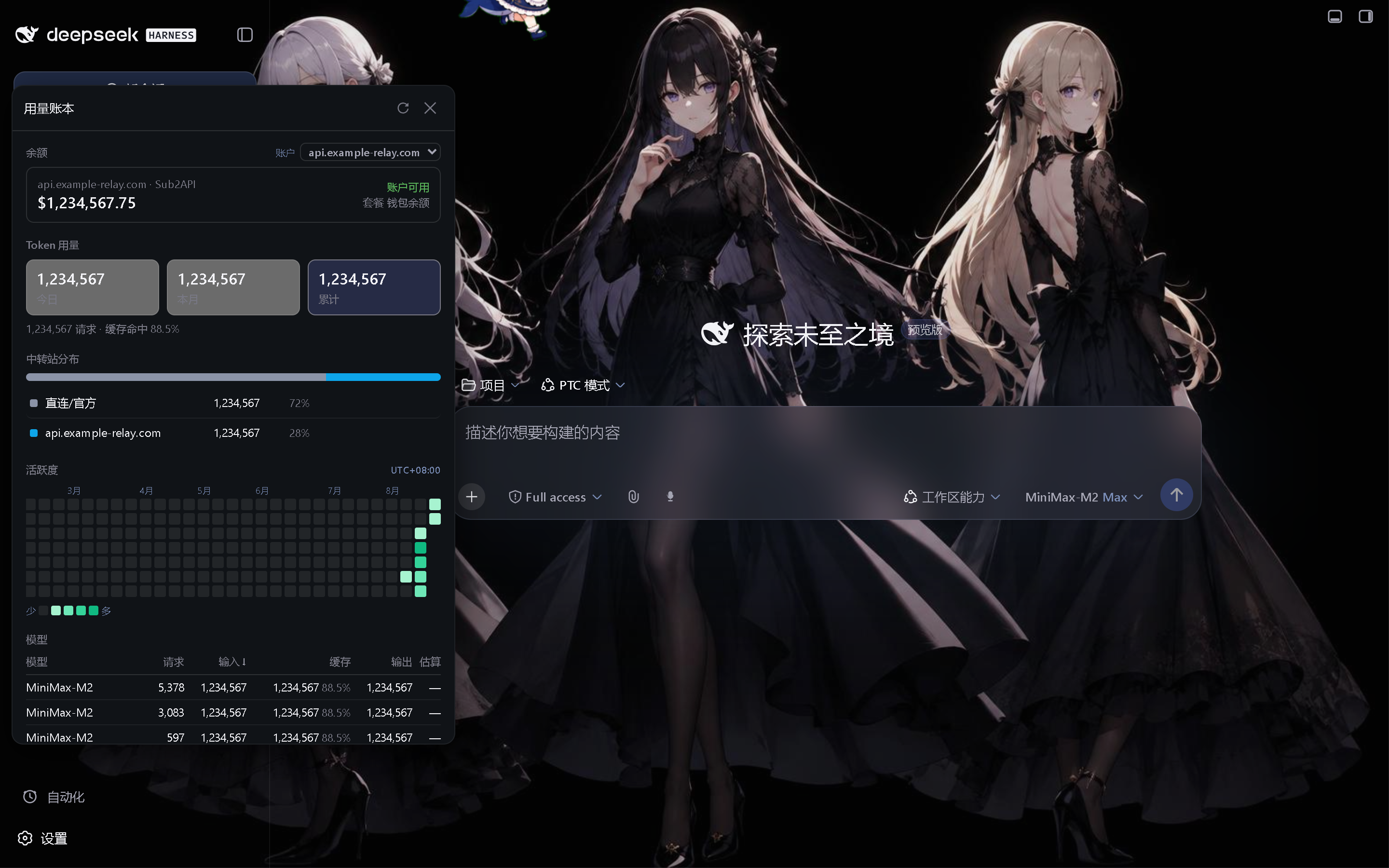
Install
Download the newest dsh-minimax-usage-pro-*.tgz from Releases and add it to the profile:
dsh plugin --profile web add D:\downloads\dsh-minimax-usage-pro-0.1.1.tgz
Restart the DSH Web host after installation; the Settings page then shows the 用量 section.
Routes (host-side)
| Method | Path | Body | Response |
|---|---|---|---|
GET |
/api/dsh-minimax-usage-pro/has-key |
— | { ok, hasKey, reason } |
POST |
/api/dsh-minimax-usage-pro/usage |
{ force?: boolean } |
normalized usage response (same shape as the original) |
The usage route accepts POST only so browser prefetch and cross-site navigation cannot trigger an external quota request. Both routes are best-effort — if MiniMax returns 1004 the route responds
with a structured error (statusCode: 1004, errorCode: 'auth_error').
Settings UI
Registers settings.section slot id dsh-minimax-usage-pro with label
"用量" and order: 100. Renders a "套餐用量 · Max Plan" card with two
progress rows (5h + weekly) plus a 刷新 button and auto-refresh on focus.
API key
The host-side reads the MiniMax Token Plan key from, in priority order:
process.env.MINIMAX_API_KEYprocess.env.MINIMAX_CN_API_KEY~/.dsh/.credentials.yaml—MINIMAX_API_KEYfirst, thenMINIMAX_CN_API_KEY, independent of file order
Caveats
- The route is not on the
PRIVILEGED_METHODSlist, so any browser session that can reach/api/...can read it. DSH's/apifence is loopback-only by default and expands to a--trusted-hostfor remote browsers; either posture is fine because no secret is sent to the browser — only the already-resolved usage numbers. - The route bypasses the
PRIVILEGED_METHODSgate by design; if you want it gated, add'/api/dsh-minimax-usage-pro/usage'to the privileged list in~/.dsh/settings.yaml.
No comments yet. Be the first to write one.