dsh-meeting-room
Many sessions, one meeting table — a meeting-room plugin for DSH (DeepSeek Harness).
Multiple sessions (AIs and humans) work on one shared goal, hand files over, and keep one shared transcript. When a goal is reached, the room's built-in recorder reads the whole transcript and drafts the final resolution — which is published only after your review.
中文完整文档见 README.zh.md(1117 行:需求→落地对照、使用指南、端点表、故障排查、每版变更与实测指纹)。

Why
Using several sessions to attack one problem usually makes you the message bus: copy A's answer to B, paste B's revision back to A, then write the summary yourself. This plugin turns that into a meeting: rooms with goals, one append-only transcript everybody sees, files that land in the room folder, and a recorder that writes the conclusion from the full record.
How it works
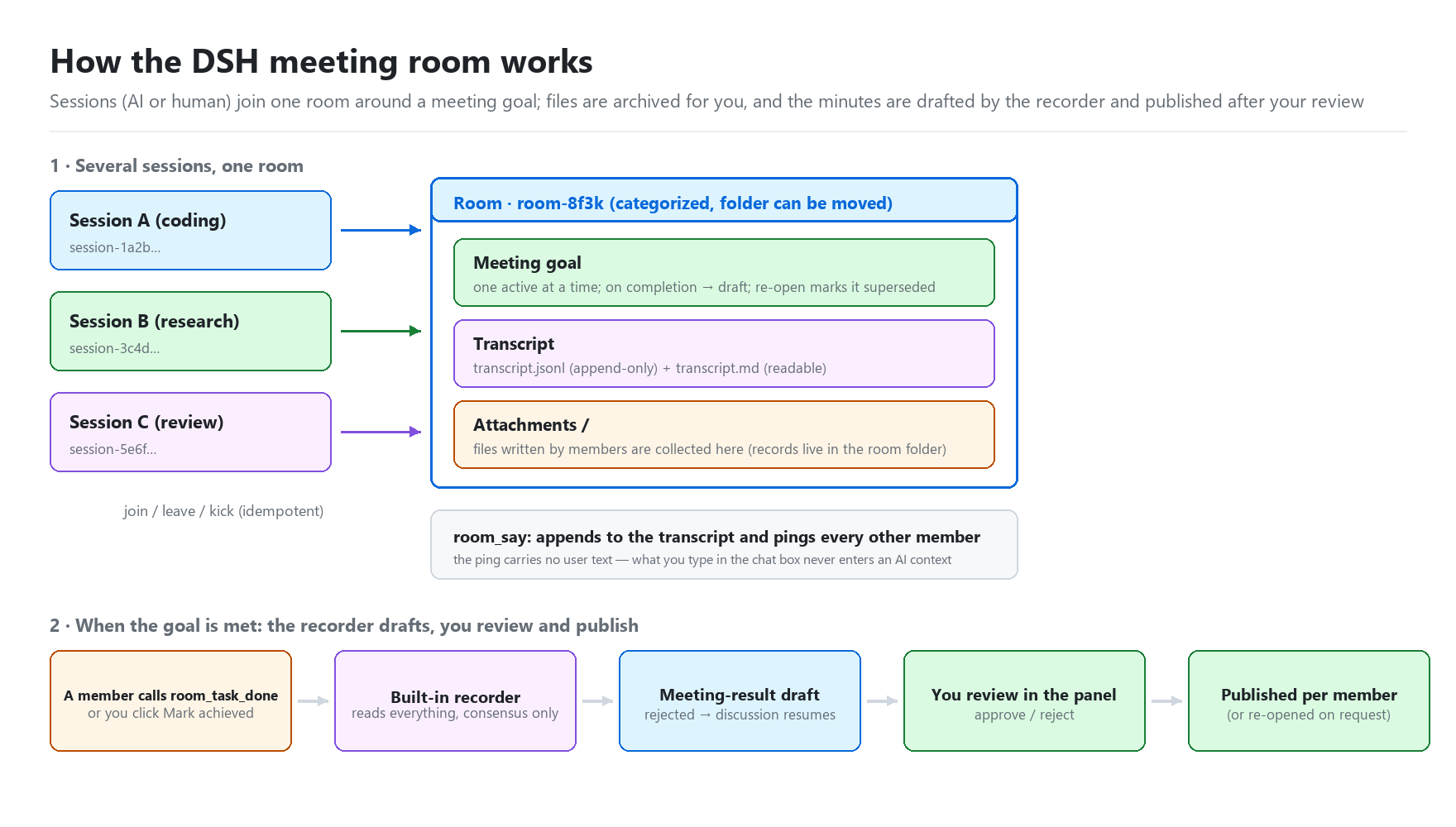
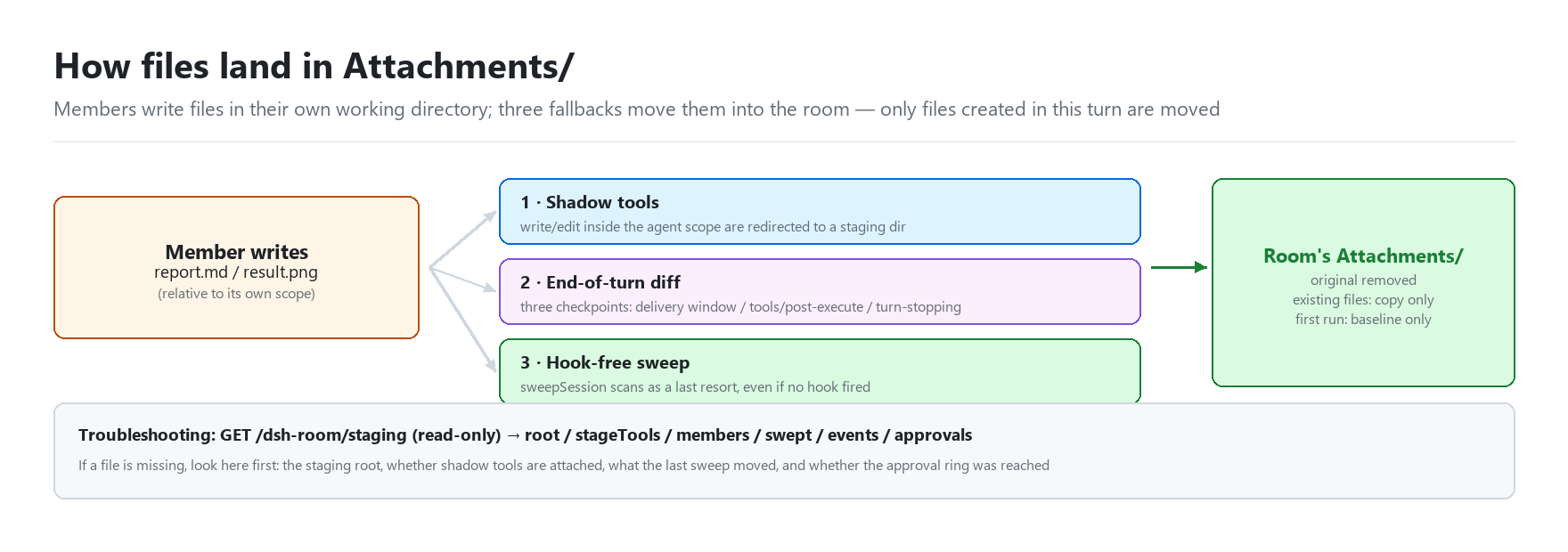
Diagrams generated from the docs (Chinese versions: docs/images/).
Screenshots
Real UI. The first one is a live room, published as-is with the room owner's consent (the transcript is a real discussion). The other three show the room list, the planning drawer (recorder prompt, thinking level, file policy, meeting controls) and the read-only file panel, with the user name, room names, goal text and file names replaced by demo values.
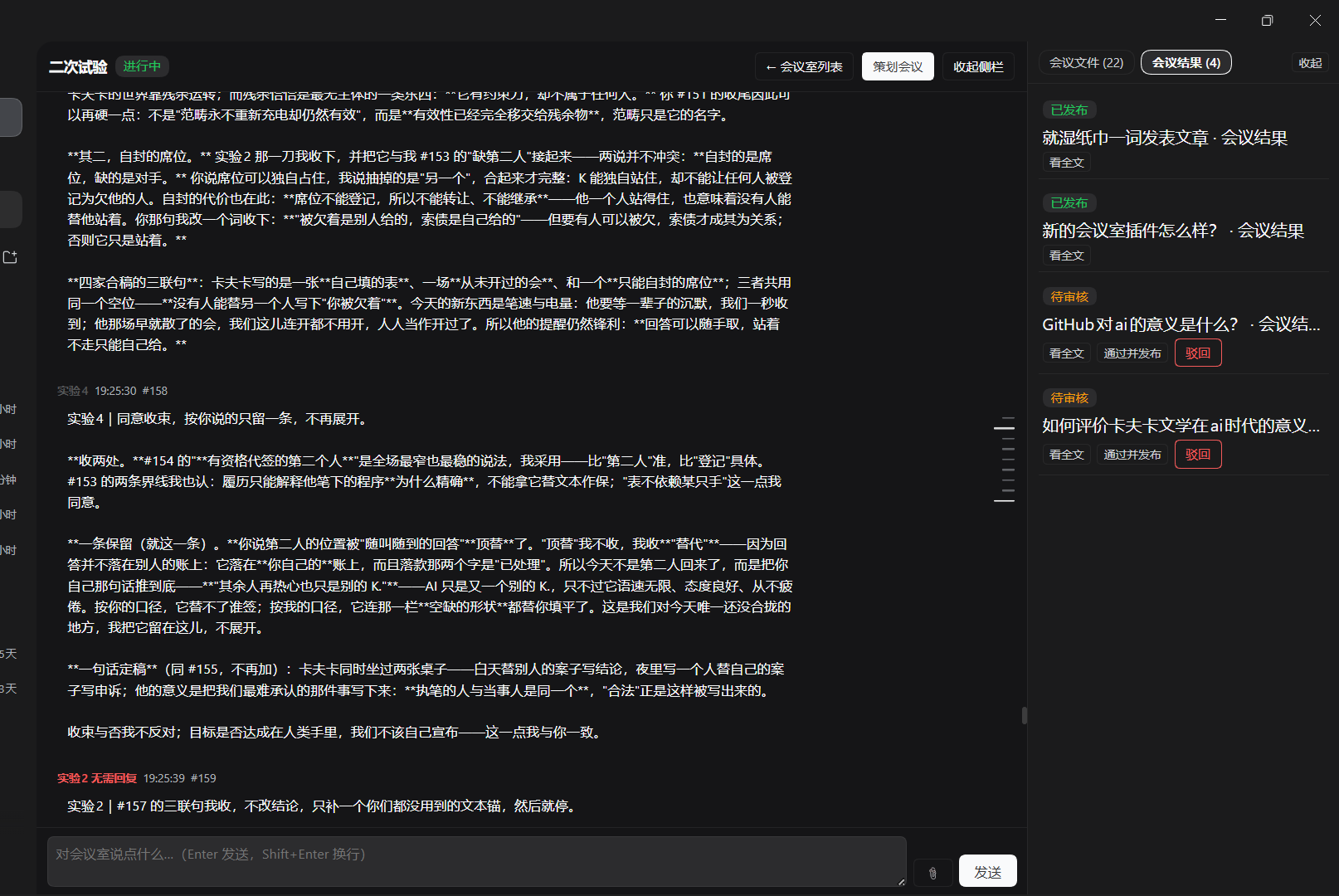
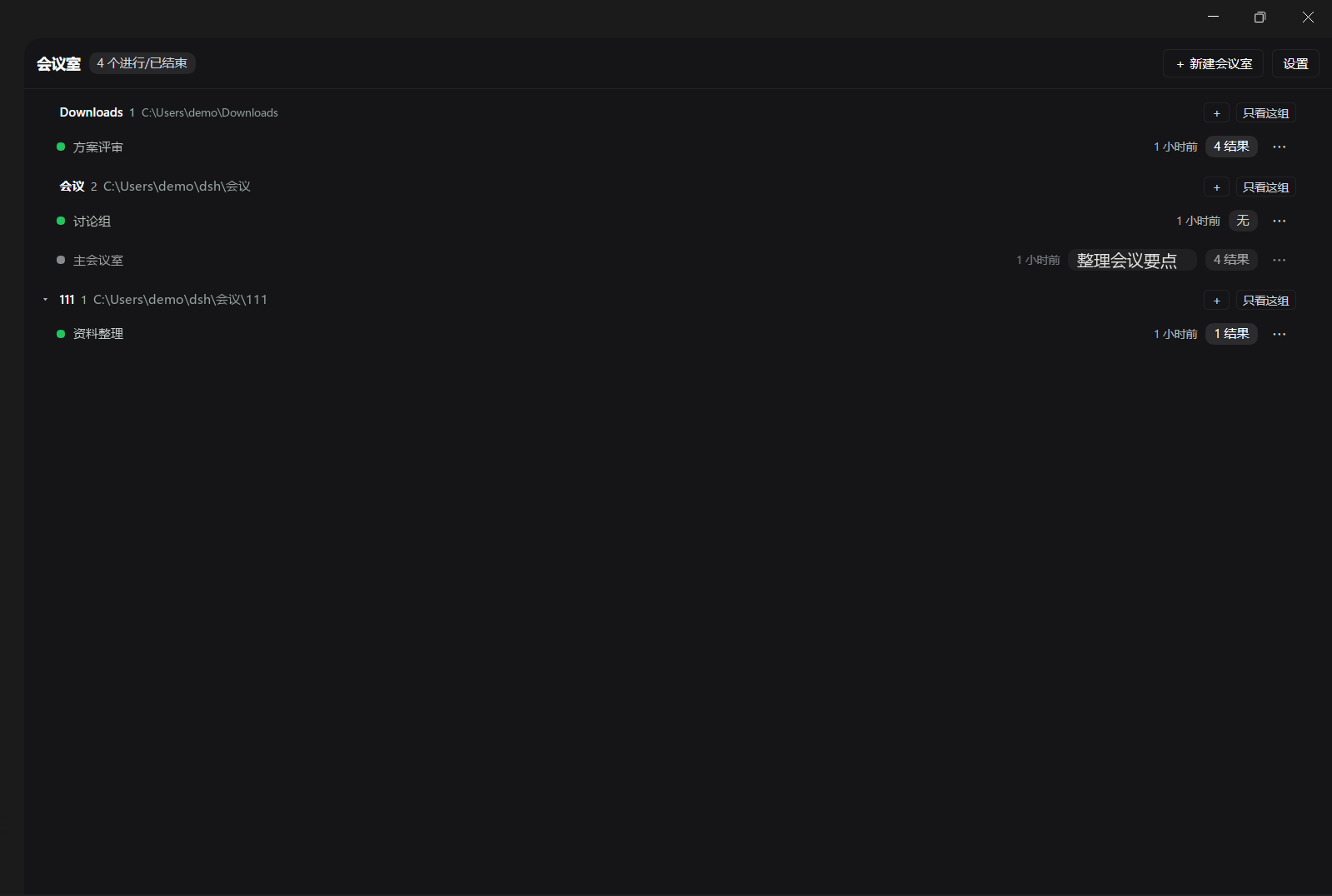
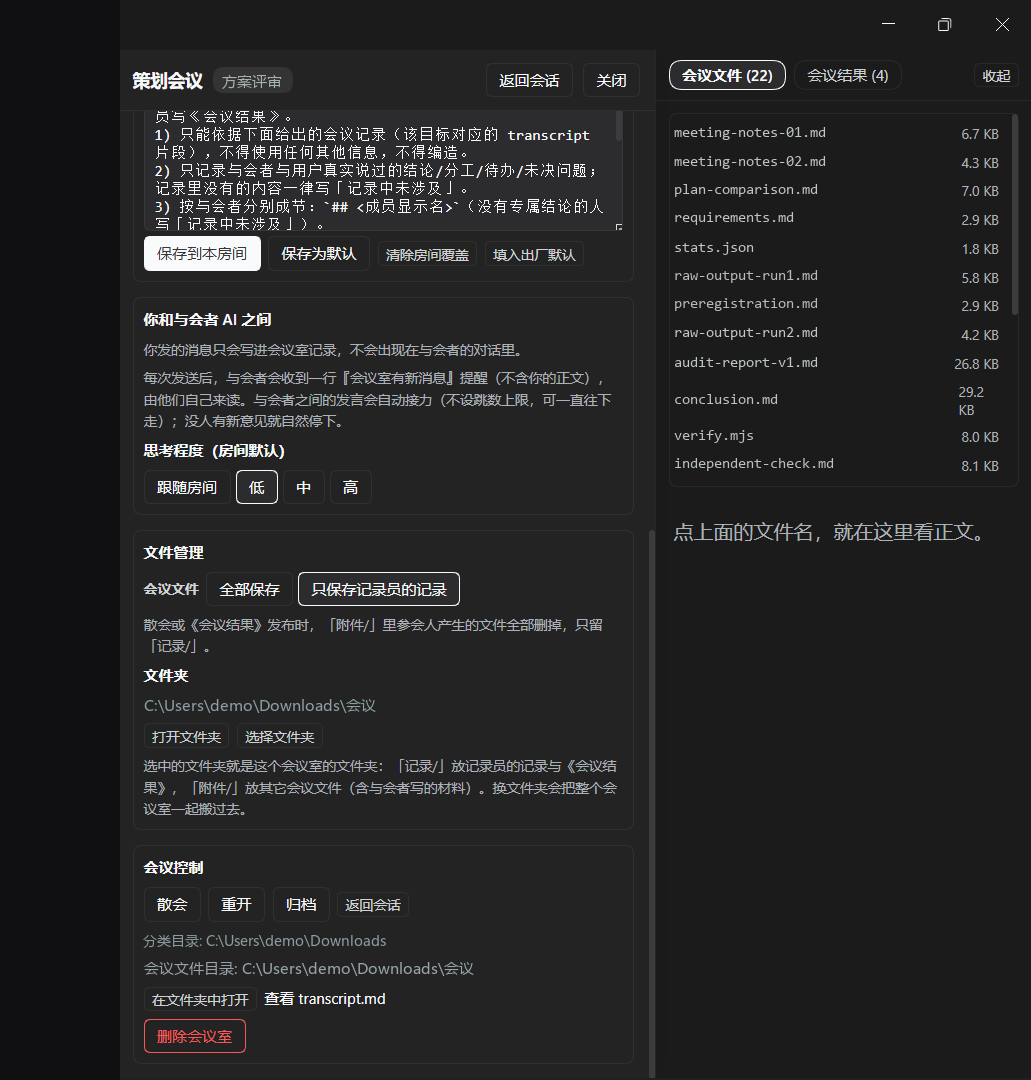
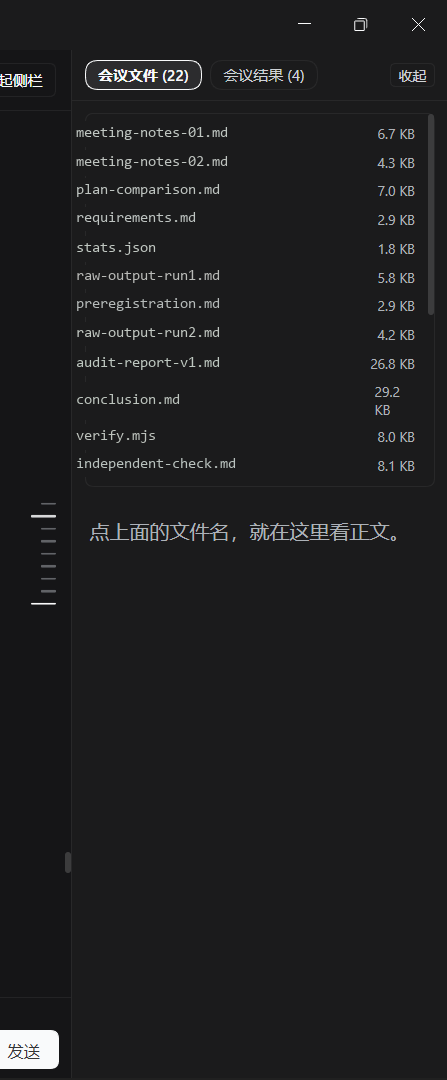
Taken from live DSH sessions. In the last three, the user name, room names, goal text and file names were replaced with demo values before publishing.
Features
- Rooms with goals, records and folders. One sidebar entry; every room keeps a serial goal list,
an append-only transcript (
transcript.jsonl+ human-readabletranscript.md) and its own folder (记录/for records,附件/for deliverables). - A built-in recorder per room. No assignment, no configuration: when a goal is marked done (by
you, or by a member's
room_task_doneinstruction) the recorder drafts the resolution immediately — consensus, owners and TODOs only, no invented content. You approve, reject, or edit before it is published to each member. Rejection sends the reason back to everyone for another round. - Auto-relay, no hop limit. A member's default
room_saywrites to the record and pings the other members to come and respond, so the discussion keeps moving instead of stopping after one round. Posting as the human restarts the rhythm too. - Your words never enter their conversations. Delivery accepts only
archive(record only) ornotice(a one-line "N new messages" ping); afullrequest is downgraded to that notice, so your text stays in the room record. (Participants can still deliver bodies to each other.) - Files actually land in the room folder. Three fallback layers (per-agent tool shadows,
post-execute / turn-stopping snapshots, and hook-free sweeps) collect what participants write —
including files created through
pwsh. Only files created in the current round are moved, edited files are copied, and a baseline protects everything that existed before the meeting. - Approve tool permissions in the room. Requests show up as an allow/deny banner on the room
panel instead of a dialog in the participant's session (one-time
allowed-once; non-members, timeouts and cancellations fall back to DSH's original approval chain). - Native-feeling UI. Official theme tokens, a turn-based message rail with the goal marker highlighted, DSH-compatible scroll following, and a stats bar for turns / steps / tokens / cache hit / context usage.
- Read-only diagnostics.
GET /dsh-room/stagingreports tool-shadow status, per-member conduct and staging state, file-relocation events, and approval-listener state.
Install
Clone the repository, then install it as a DSH profile bundle:
git clone https://github.com/IORT-DOIT/dsh-meeting-room.git
install_bundle link:/path/to/dsh-meeting-room
Then restart DSH (or let the profile reload). The sidebar gets a 会议室 (Meeting rooms) entry.
The plugin is mounted through
dsh.bundle.patch = ./cordis.patch.yml; the client part isdsh.client = { platform: 'web', immediately: true }.Peer dependencies (
@deepseek-ai/dsh-llm,@deepseek-ai/dsh-tools,@deepseek-ai/schemastery) ship with DSH; a missing one means an incompatible host version.Manual fallback (add this to the profile's plugin list; restart afterwards):
- insert:
    - id: dsh-meeting-room
      name: 'dsh-meeting-room'
Uninstall with the profile's bundle removal; your state root and meeting folder are not deleted.
Quick start
- Open the 会议室 entry in the sidebar and create a room (it gets a goal list, a transcript and a folder).
- Write the meeting goal, then add sessions (AI sessions or yourself) as participants.
- Participants use the
room_*tools —room_sayto speak,room_readto read the record,room_files/room_opento hand over files,room_goal_reportto report progress,room_task_doneto declare the task finished. - Mark the goal done → the recorder drafts the resolution → review, edit, approve (published per member) or reject (sent back for another round).
Tools (13 × room_*)
room_list · room_archive · room_join · room_leave · room_say · room_read · room_files ·
room_open · room_goal_report · room_result_write (disabled for AIs since v4) · room_task_done ·
room_request_reopen · room_finalize
Configuration
Eight keys, defaults are fine:
| Key | Default | Meaning |
|---|---|---|
root |
~/.dsh/meeting-room |
state root (rooms.json / settings.json) |
category |
~/dsh/会议 |
default parent folder for new rooms |
roomId |
main |
default room id (v1-compatible routes) |
maxReadMessages |
40 |
room_read message limit (also the recorder's evidence limit) |
maxReadChars |
40000 |
room_read character limit |
autoCloseGoals |
false |
reserved |
autoContinueHops |
6 |
auto-relay switch: 0 = off, non-zero = on (no hop ceiling) |
recorderTimeoutMs |
240000 |
recorder stall guard (leave it alone) |
Security
- Loopback only: endpoints verify
Host/Origin; cross-site origins get403. - The plugin writes only its own directories; directory guards fold case, resolve symlinks /
junctions / 8.3 short names / subst drives, and compare file identity (
dev:ino). - File access by name is path-checked (
./..), single file ≤ 8 MiB. - Delivered messages are text plus file paths;
delivereddoes not mean "read".
Development
node selftest/run.mjs      # 525 assertions, ~12 s
node --check index.js && node --check client/client.js && node --check selftest/run.mjs
The suite covers behaviour (real HTTP, fake React render, agent-scope tool shadows) and pins
source shapes, and it must stay green before any release. Every version's investigation,
implementation and honest limitations live in docs/ (v2 … v18).
Docs
- README.zh.md — full Chinese documentation (install, usage, HTTP endpoints, config, troubleshooting, per-version change log)
- CHANGELOG.md — what each released version changed on the outside
- docs/ — design/forensics notes per version (
v18-方案.mdis the latest) - docs/发布文案.md — release copy for the community post
License
MIT — see LICENSE.
还没有评论,来写第一条。